• Skip to primary navigation
  • Skip to main content

VRSUN

Hot Virtual Reality News

HOTTEST VR NEWS OF THE DAY

  • Home

PC VR News & Reviews

Pimax Delays Dream Air and Dream Air SE to December, SLAM Versions Likely to 2026

September 22, 2025 From roadtovr

Pimax Dream Air | Image courtesy Pimax

Pimax issued an update detailing its upcoming fleet of micro-OLED PC VR headsets, which also included info on a delay affecting its thin and light headsets, Dream Air and Dream Air SE.

The update, seen at the bottom of the article, details three products Pimax is preparing to ship:

  • Dream Air – Thin and light PC VR headset containing Sony Micro OLED panels (3,840 × 3,552 pixels per eye) and concave-view pancake optics, delivering 110° horizontal FOV, eye-tracking, auto-IPD adjustment, spatial audio, and DisplayLink. 
  • Dream Air SE – Lower resolution version of Dream Air containing Sony Micro OLED panels (2,560 × 2,560 pixels per eye) and all of the above.
  • Crystal Super (Micro OLED Engine) – A new swappable optical module for Pimax’s flagship Crystal Super, serving up to 116° horizontal FOV with the same panels and lenses as Dream Air.

Pimax announced Dream Air last December, which was set to serve up competition to thin and light PC VR headsets like Bigscreen Beyond and Shiftall MaganeX Superlight 8K. While launch was initially planned for May 2025, the headset was subsequently delayed to Q3 2025.

Now, Pimax says both the SteamVR tracking versions of Dream Air and Dream Air SE, the latter of which was announced in May, are scheduled to ship sometime in December.

Pimax Dream Air | Image courtesy Pimax

While the SteamVR tracking version (aka ‘Lighthouse’) are shipping this year, Pimax is offering SLAM versions of both headsets, which don’t require external base stations. The SLAM variants are said to start an “external beta test” in December—so no word on when those ship just yet.

As for Crystal Super’s new swappable micro-OLED optical module, a version of the headset containing the module will start shipping in October. There’s no mention of whether that also means prior Crystal Super owners will be able to purchase the module by itself in that time frame.

Check out all the specs, price and release date info Pimax announced during its big update below:

Note: Pimax breaks up its pricing structure with an upfront cost of around 60% of the final price. The remainder is paid as a software fee that gives users unlimited access to Pimax Play, which is offered in a 14-day trial. Pimax Play is required for the headset to work.

Pimax Dream Air Specs

Image courtesy Pimax
  • Display: Sony Micro-OLED screen (3840 × 3552 pixels per eye)
  • Optics: 110-degree horizontal FOV with Pimax’s ConcaveView optics
  • Weight: <170 grams>
  • Features:
    • DFR-ready eye-tracking
    • Hand tracking
    • SLAM tracking or Lighthouse tracking
    • 6DOF controllers
    • Integrated spatial audio
    • Dual fan for proper cooling
    • Powered by Pimax Play
    • Split DisplayPort Cable
  • Price: $1,999 for SteamVR tracking version (shipping in December), $2,299 for SLAM tracking version (beta testing in December)

Pimax Dream Air SE Specs

Image courtesy Pimax
  • Display: Sony Micro-OLED screen (2,560 × 2,560 pixels per eye)
  • Optics: 105-degree horizontal FOV with Pimax’s ConcaveView optics
  • Weight: <140 grams>
  • Features:
    • DFR-ready eye-tracking
    • Hand tracking
    • SLAM tracking or Lighthouse tracking
    • 6DOF controllers
    • Integrated spatial audio
    • Dual fan for proper cooling
    • Powered by Pimax Play
    • Split DisplayPort Cable
  • Price: $899 for SteamVR tracking version (shipping in December), $ 1,199 for SLAM tracking version (beta testing in December)

Crystal Super Micro-OLED Specs

Image courtesy Pimax
  • Display: Sony Micro-OLED screen (3840 × 3552 pixels per eye)
  • Optics: 116-degree horizontal FOV with Pimax’s ConcaveView optics
  • Weight: ?
  • Features:
    • DFR-ready eye-tracking
    • Hand tracking
    • SLAM tracking (Lighthouse optional)
    • 6DOF controllers
    • Integrated spatial audio
    • Dual fan for proper cooling
    • Powered by Pimax Play
    • Split DisplayPort Cable
  • Price: $2,199 for full headset & module (shipping in October)

Filed Under: News, PC VR News & Reviews

‘Oasis’ WMR Driver Expected to Later This Month, Bringing New Life to Microsoft’s PC VR Headsets

August 5, 2025 From roadtovr

Microsoft stopped supporting its WMR platform on Windows 11 last year, essentially putting an end to its first foray into PC VR headsets. However, an unofficial SteamVR driver called ‘Oasis’ aims to bridge the gap when it releases later this month.

According to Oasis creator Matthieu Bucchianeri, the driver’s tentative global release date is August 29th, which he notes is subject to Valve approving release on Steam.

Oasis is slated to bridge Windows Mixed Reality headset support to SteamVR, which would otherwise need Microsoft’s Mixed Reality Portal to function. This, Bucchianeri says in the project’s GitHub, will include support for full 6DoF tracking along with motion controllers.

As for broad GPU support, Oasis is unfortunately restricted to Nvidia GPUs due to the way SteamVR interfaces with the GPU drivers. Bucchianeri has been trying to gain AMD’s permission, although at this point, he says the effort is “dead in the water.”

Bucchianeri says in a Reddit post this essentially comes down to AMD either “ignor[ing] 3rd party usage flag when LiquidVR attempts to open the device [, or offering] a functional EDID override so we can mask off the flag ourselves.”

Last October, the company deprecated the WMR platform with the launch of Windows 11 24H2, essentially killing support for a fleet of partner PC VR headsets, which included devices from Acer, Asus, Dell, Lenovo, HP, and Samsung.

Notably, Bucchianeri worked as a software engineer on Microsoft’s mixed reality division. While he currently leads firmware efforts at the company’s Xbox Gaming Devices Ecosystem, Oasis is a personal project.

Bucchianeri notes it doesn’t breech any prior non-disclosure agreements, leverages SteamVR, and doesn’t borrow any Microsoft intellectual property.

Filed Under: News, PC VR News & Reviews

Varjo is Pulling Support for All of Its Older XR Headsets Next Year

July 18, 2025 From roadtovr

Varjo announced that starting next year, it’s no longer supporting its fleet of third generation XR headsets, which includes XR-3, VR-3, and Varjo Aero.

As first spotted by XT Today, Varjo says it’s now “focusing our manufacturing efforts on the XR-4 Series headsets,” which released in late 2023.

The Finland-based company notes in a support FAQ that its companion software, Varjo Base, will receive software updates and bug fixes until the January 1st, 2026 cutoff date.

Image courtesy Varjo

After its final update, the company says that owners of XR-3, VR-3, and Aero can still use older versions of the software, but this also includes the end of customer support, technical and developer assistance for those devices.

Released in 2021, Varjo’s third-gen headsets marked the company’s departure from solely focusing on enterprise headsets. While both its XR-3 and VR-3 were squarely targeted at businesses with cash to spare—priced at $5,495 and $3,195 respectively—which included an obligatory annual subscription fee, Aero was the company’s first to actively appeal to prosumers.

Varjo Aero | image courtesy Varjo

Released in late 2021, Aero was priced at $2,000, which included subscription-free compatibility with SteamVR via Varjo Base (i.e. you can’t just plug it in like Valve Index, Bigscreen Beyond 2, etc).

Although Aero was by far one of the most expensive prosumer PC VR headsets on offer at the time, it wasn’t for naught. In our deep dive review of Aero, Road to VR’s Ben Lang praised the headset’s “stunning clarity,” noting it was poised to be “a dream headset for VR simmers who aren’t afraid to trade cash for immersion.”

Notably, Varjo has been sold out of all third-gen headsets for at least over a year now, with the company additionally confirming production has been discontinued for these devices.

This leaves the Varjo’s main focus on its XR-4 Series headsets, which were released in late 2023, marking a return to its enterprise-only roots. Its fourth-gen series includes the standard XR‑4 ($5,990), XR‑4 Focal Edition ($9,990), and its military-compliant XR‑4 Secure Edition, which comes in three variants (~$18,00 – $32,000).

While previously launched without subscription-based access to Varjo Base, the company announced in March that some previously free software features would be paywalled behind a ‘Varjo Base Pro’ license, which includes more advanced mixed reality capabilities, expanded tracking support, programmatic controls, and multi-app functionality.

Filed Under: News, PC VR News & Reviews

Bigscreen Reveals ‘VRChat Edition’ of Beyond 2e PC VR Headset, Releasing in September

July 17, 2025 From roadtovr

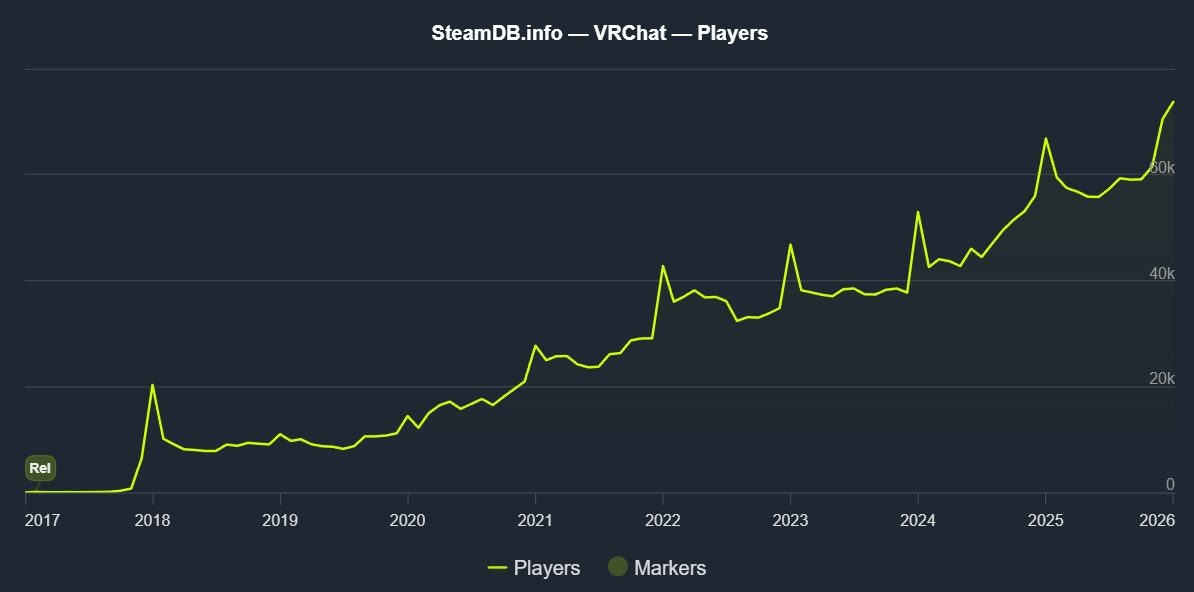
Bigscreen unveiled a new ‘VRChat Edition’ of its slim and light Beyond 2e PC VR headset, which the company says is specifically designed for die-hard users of VR’s most popular social platform.

Bigscreen began shipping the first production units of Beyond 2 late last month, which includes both the standard Beyond 2 and its eye-tracking enabled variant, Beyond 2e.

Now, the company announced it’s also launching an exclusive VRChat Edition of the Beyond 2e, slated to start shipping out sometime in September 2025.

As far as specs go, the VRChat Edition is virtually the same as the standard Beyond 2e, including it eye-tracking sensors, 2,560 × 2,560 micro-OLED displays, and 116° diagonal FOV, thanks to the inclusion of new pancake lenses—all of it weighing in at 107g.

Image courtesy Bigscreen

Now available for pre-order for $1,269—just $50 more than the standard Beyond 2e—the upcoming VRChat Edition does however promise a few differences, notably including a translucent Atomic Purple shell and hand-drawn packaging artwork.

Note: you’ll need a VR-ready PC to run any of Bigscreen’s headsets, including the new Beyond 2e VRChat Edition, as well as SteamVR base stations, controllers, and optional trackers for body tracking in VRChat. Find out here if your PC is VR-ready.

Image courtesy Bigscreen

Purchase also includes exclusive VRChat digital items, including VRChat stickers and badges for profiles. Bigscreen says more features are planned for the VRChat Edition in the future, which includes including “some rare giveaway drops.”

While orders are slated to start shipping in September, current preorder holders can actually request an upgrade to the VRChat Edition by contacting support (support@bigscreenvr.com).

In the meantime, you can check out a deep dive with Bigscreen founder and CEO Darshan Shankar and VRChat Head of Community Tupper in an hour-long discussion that touches on everything from the improvements in Bigscreen’s latest headset, to why eye-tracking is important in VRChat.

Filed Under: News, PC VR News & Reviews

Bigscreen Beyond 2 Starts First Wave of Shipping, Aims for Immediate Fulfillment by September

June 27, 2025 From roadtovr

Bigscreen announced it’s officially begun shipping the first production units of Beyond 2, the company’s latest slim and light PC VR headset.

Following a recent production delay, the company says in a blogpost that Beyond 2 headsets are now shipping, noting that due to a backlog of pre-orders, fulfillment will continue through August and beyond.

Bigscreen says that new orders placed today are expected to ship between August and September, with the goal of clearing the backlog by late September and transitioning to near-immediate fulfillment.

This includes both versions currently on sale—Beyond 2 and Beyond 2e—the later of which includes eye-tracking. Beyond 2 is priced at $1,019 and Beyond 2e at $1,219, both of which can be purchased direct from Bigscreen.

And Beyond 2 has proven to be pretty popular with pre-order customers. The company said during its March pre-order launch that its first 24 hours of sales outsold the original Beyond by “more than the first four months”.

Additionally, Bigscreen now says that more units were sold in the first 11 days than all Beyond 1 units sold in its first year. This has prompted the company to expand manufacturing at its Los Angeles factory, as well as hire new technicians and customer support staff. Bigscreen says it’s additionally deployed engineers to overseas suppliers to supervise production.

As for its other products, the company says that orders with the optional Custom-Fit Cushions placed through May 7th will ship by mid-August, while Halo Mount orders will begin shipping in late September or October due to manufacturing delays.

What’s more, customers who ordered a Beyond 1 and haven’t received a unit yet will automatically be upgraded to Beyond 2, putting them first in line for shipments, which is expected to complete by July 25th, Bigscreen says.

Notably, the company assured customers back in April that its latest PC VR headset wouldn’t increase in price due to tariffs, which have been levied by the US government on many goods manufactured in China.

Filed Under: News, PC VR News & Reviews

« Previous Page

  • Home