• Skip to primary navigation
  • Skip to main content

VRSUN

Hot Virtual Reality News

HOTTEST VR NEWS OF THE DAY

  • Home

Meta is Spinning out ‘Supernatural’ a Mere 3 Years After $400M Acquisition

June 4, 2026 From roadtovr

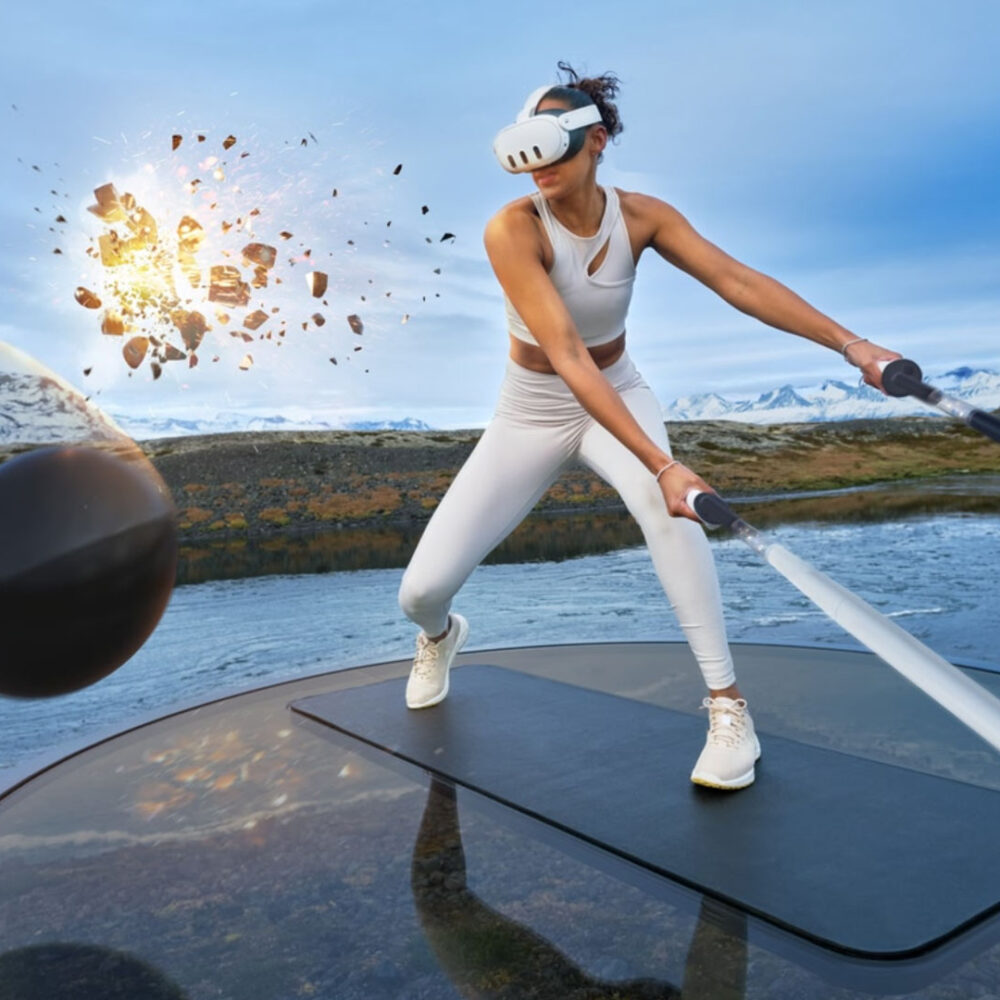
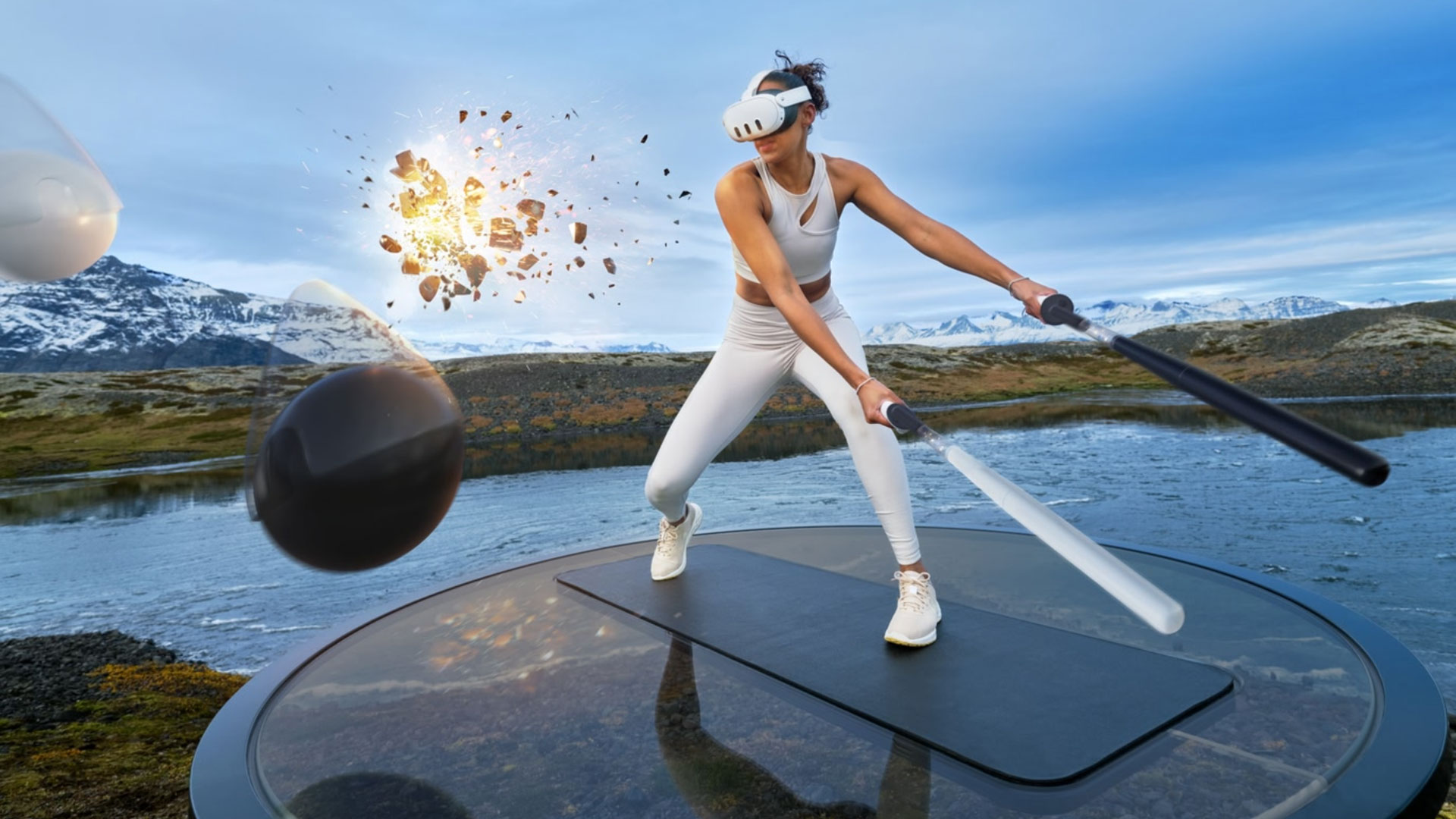
Supernatural won’t be in ‘maintenance mode’ for long, because Meta announced it’s effectively spun out the VR fitness app into an independent company, Supernatural Health.

The founders and coaches behind Supernatural are parting ways with Meta. Soon, users can look forward to more fresh content, which has notably been missing from the subscription-based VR fitness app since Meta announced in January that it would no longer be pushing content updates as a part of a wider pullback from VR gaming.

And it’s going to be clean break, as the new studio says in a community post that Supernatural is set to be independent from Meta, and will be a new, separate app in Quest’s Horizon Store.

While the current version of Supernatural will be winding down on December 3rd, which includes all associated subscriptions, the studio expects the new app to launch later this fall, noting it plans to build “major parts of the technology from the ground up as a much smaller company.”

That also means subscription prices will change from its current $10/month, or $100/year rate:

“A while back, the subscription price was lowered to make Supernatural more accessible, and we still believe in that goal. To keep building independently, and continue delivering the experience you expect, we need to return to the original $20/month and we haven’t made that decision lightly.”

The studio says it’s offering a ‘Founding Member’ rate, which will cost $180 for the first year. After that, the price jumps to $20/month, or $200/year. That said, the upcoming version of Supernatural will include all original coaches “back on day one,” as well as new workouts and future features.

“The early days won’t be perfect, but our small team is committed to building the Supernatural you know and love and taking it to the next level,” the studio says. “We are so grateful for everything you’re capable of, in the app and outside of it. Thank you for showing up for Supernatural, and for each other.”

This follows a lengthy battle to acquire Supernatural, which seems so distant now in retrospect. In late 2021, Meta announced it was acquiring Within, the studio behind Supernatural, for a whopping $400 million.

It wasn’t a smooth transition though, as the deal quickly drew the ire of the US Federal Trade Commission, which claimed Meta was unfairly monopolizing the VR fitness space. After more than a year of costly antitrust battles, the FTC eventually dropped the suit in early 2023, noting that it would seek no further appeal.
Filed Under: Uncategorized

James Cameron’s 3D Studio Acquires 3D Camera Maker STEREOTEC

June 2, 2026 From roadtovr

Lightstorm Vision, James Cameron’s 3D production studio, has acquired STEREOTEC, a 3D camera maker that’s powered a number of films and multi-camera immersive concerts.

Details of the deal are still under wraps, however Lightstorm Vision says the acquisition will help integrate Stereotec’s technology directly into its 3D production pipeline, enabling capture, processing, and delivery of 3D video.

“By capturing consistent ‘ground truth’ depth data at the source, the technology unlocks downstream automation, AI processing, and the scalable 3D workflows that Lightstorm Vision is bringing to cinematic, broadcast, and immersive platforms,” the companies say in a press statement.

Stereotec is most recently known for providing the camera tech behind 3D concert ‘Billie Eilish – Hit Me Hard and Soft: The Tour’, which Lightstorm says was one the “largest and most complex live 3D capture deployments ever executed,” having included more than 17 stereo camera systems (34 cameras) across fiber and RF into a unified pipeline under live tour conditions.

That sort of tight integration allowed editorial teams to begin cutting synchronized 3D multi-cam footage while the performance was still underway, the studio says, something aimed at reducing reliance on post-production reconstruction and lengthy editing times.

“Capturing accurate depth at the source produces results no downstream process can recover after the fact—and provides the foundation for the scalable, production-ready 3D workflows Lightstorm Vision is establishing as the new standard across cinematic, broadcast, and immersive platforms,” the studio says.

Established in 2024 as Lightstorm Entertainment’s dedicated 3D studio, Lightstorm Vision’s stereoscopic tech has supported over 27 feature films, 9 concert films, and 140 sports broadcasts worldwide, generating in excess of $8 billion in global box office. It also most recently struck a multi-year deal with Meta to produce spatial content across multiple genres, including live events and full-length entertainment.

Founded near Munich by stereographer and engineer Dr. Florian Maier in 1997, Stereotec produces precision-engineered 3D rigs, having supported feature films including Ang Lee’s Gemini Man (2019) and Billy Lynn’s Long Halftime Walk (2016), Denis Villeneuve’s Dune: Part Two (2024), as well as immersive titles for Quest and Apple Vision Pro. To date, the company holds twelve Lumiere Awards from the Advanced Imaging Society for excellence in stereoscopic 3D production.

Filed Under: XR Industry News

Meta Reportedly Plans 4 New Smart Glasses Models Amid Aggressive 10M Unit Push

June 1, 2026 From roadtovr

According to an internal memo viewed by The Information, Meta is aiming to release up to four more smart glasses models this year. Meanwhile, the company is reportedly developing an AI pendant, with testing slated to start next year.

The memo, which thus far hasn’t been confirmed by Meta, was reportedly authored by Meta Wearable VP Alex Himel. In it, Himel details on some of the projects currently in the works at the company’s Reality Labs XR hardware division.

Amid expectations to sell 10 million wearables in the second half of 2026, Himel reportedly revealed the company is developing an AI-powered pendant set to go into testing next year, which is described similar to tech from Limitless, a startup Meta acquired in 2025 that built devices for recording, transcribing, and summarizing conversations.

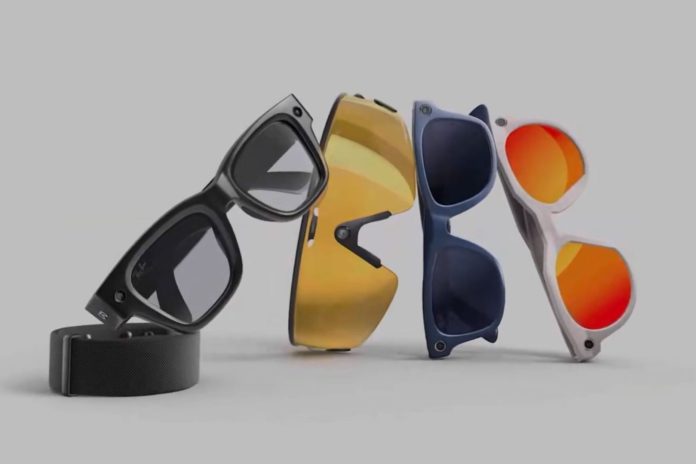
Current lineup of Meta smart glasses | Image courtesy Meta

As per The Information’s report, the company also hopes to expand its AI glasses lineup beyond its current Ray-Ban Oakley models, which is said to include more brands, styles, and variants. Notably, Meta signed an agreement in 2024 with smart glasses partner EssilorLuxottica to extend their partnership to 2030.

Specifics are still under wraps, however the report maintains that Meta will debut at least four new pairs of smart glasses: ‘Modelo’ as soon as June, and ‘Luna’ and ‘RBM2 Refresh’ sometime this Fall, the latter of which suggesting a new Ray-Ban hardware refresh. In December, the company is also expected to release ‘Mojito VIP’. Meta is also reportedly testing models codenamed ‘Artemis’ and ‘SSG’ (“supersensing” glasses).

Like previous Ray-Ban and Oakley Meta glasses, the upcoming units are slated to include Meta’s AI models, however Himel’s memo also mentions bringing an AI agent called ‘Hatch’ to the company’s glasses.

Meanwhile, Meta is additionally aiming to launch a business-focused subscription called ‘Wearables for Work’, which could better position the company to generate recurring revenue instead of relying on one-off device purchases.

This follows a monumental shift in priorities at Reality Labs, which pivoted earlier this year to focus on AI and smart glasses while markedly de-emphasizing its previous VR and metaverse efforts.

While Meta ostensibly hopes to sell 10 million wearables in the second half of 2026, it could exceed that figure if demand is strong. According to a Bloomberg report earlier this year, Meta and EssilorLuxottica have doubled the expected smart glasses production target, which would increase annual capacity to 20 million units by the end of 2026, with additional capacity capable of scaling to 30 million units.

Filed Under: XR Industry News

Acer Re-enters XR with New AR & Smart Glasses

June 1, 2026 From roadtovr

Acer unveiled two new XR glasses, marking nearly a seven-year absence from the XR space.

The last we saw the ‘Acer’ brand emblazoned on an XR headset was its final Windows PC VR headset released in 2019, the OJO 500, which was mostly targeted at businesses. Since then, the company has been conspicuously absent from the XR space, seemingly investing more in its glasses-free 3D displays, laptops, and cameras, which it sells under the SpatialLabs brand.

Now the Taiwanese tech giant is stepping back in with two devices: tethered AR glasses, called the ‘AR Vision GR0’, and Meta-style smart glasses, called ‘GI0 AI Glasses’.

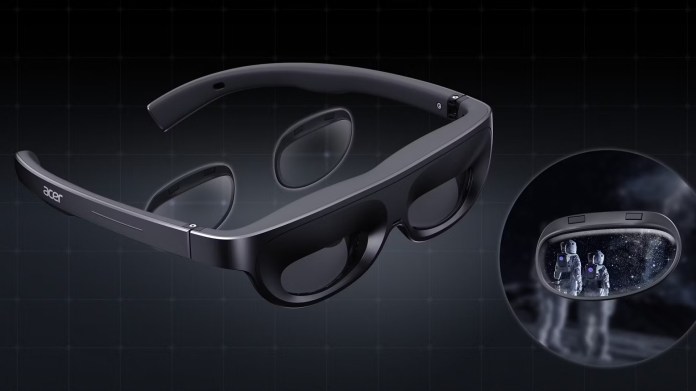
Acer AR Vision GR0

Image courtesy Acer

Acer AR Vision GR0 glasses tether via cable to iOS and Android smartphones and Windows PCs, serving up dual 1,920 × 1,080 microOLED displays with what appears to be bird bath-style optics similar to those used by competitors, including XREAL and VITURE glasses.

While Acer hasn’t released any actual field-of-view specs, the company says it delivers a “172-inch screen viewed from 6 meters away.” As you’d expect, Acer is targeting gaming and productivity, as well as privacy for work-related stuff in public spaces.

Acer AR Vision GR0 is coming soon to North America starting at $500 USD. It’s also set to arrive in EMEA in Q4 2026 for €600, and in Australia in Q3 2026 for $1,000 AUD.

Check out the specs below:

Name Acer AR Vision GR0
Model GR100F
OS Compatibility Android, iOS, Windows
Display dual microOLED, 200 nits, 1,920 x 1,080 per-eye resolution, 60 Hz refresh rate, DCI-P3 95% color gamut, 24-bit color, 50,000:1 contrast ratio
Audio Stereo, one dynamic unit on each side
Power Charge 5.5 V 0.85 A
Connectivity Wired
Controls Swipe brightness, swipe volume
Dimensions and Weight IPD: 64 mm, 69 g
Sensors 3DoF, accelerometers, proximity, magnetometers
Features Detachable light shield, myopia magnetic lens option

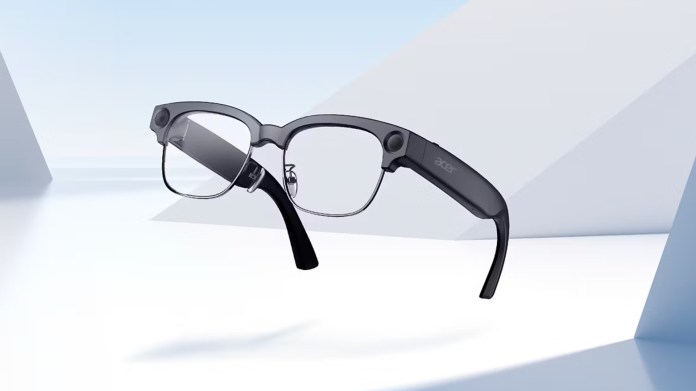
Acer GI0 AI Glasses

Image courtesy Acer

It’s not clear whether Acer’s GI0 AI Glasses run Android XR, however the company does say they rely on Google Gemini for AI queries, which also means voice-activated interaction, real-time image analysis, and translation.

Much like Ray-Ban Meta, G10 AI Glasses include a built-in 12MP camera delivering 3,024 x 4,032 still images and 1,920 x 1,080 video at 30 FPS, which is admittedly a bit below Ray-Ban Meta’s (Gen 2) 3K, 30 FPS video capture. Notably, users will also need the Acer AspireSync companion app on a paired device—either Android or iOS—which connects via Bluetooth 5.0 and Wi-Fi 5.

Acer GI0 is coming to North America soon starting at $300 USD. It’s also coming to EMEA in Q4 2026 for €400, and to Australia in Q3 2026 for $600 AUD.

Check out the specs below:

Name Acer GI0
Model GI100
AI Model Google Gemini
OS Compatibility Android 12 and above, iOS 15 and above
Companion App Acer AspireSync
Camera 12M – Image: 3,024 x 4,032; Video:1,920 x 1,080 at 30 FPS
Audio Stereo, one dynamic unit on each side, three microphones
Storage 32 GB eMMC
Battery 217 mAh
Power Charge 5V 1A
Connectivity Wi-Fi 5, Bluetooth 5.0 support
Controls Capture button with short press and long press
Dimensions and Weight 46 g (frames only)
Features Google Gemini AI voice assistant, status LED, side touchpad, AI translations, AI captions

Filed Under: -2026 Sections, XR Headset & Accessories Reviews

As Virtual Worlds Close, Communities in ‘Rec Room’, Meta’s ‘Horizon Worlds’, and Others Create Ways to Survive

May 29, 2026 From roadtovr

Guest Article By Julian Reyes

Julian Reyes is an award-winning XR producer, with more than two decades of experience spanning immersive media, storytelling, music culture, and technology. He is the Founder and Director of the Virtual Worlds Museum, where he leads efforts to preserve, explore, and showcase the history, culture, and future of virtual worlds. This June, he’ll speak at the AWE USA 2026 panel discussion, “How We Can Preserve Online Worlds and Why It Matters”.

There is a particular kind of grief that comes when a virtual world sunsets.

It is easy for some to frame these closures as the disappearance of a product, a platform, or a failed business model. But those of us who have spent time inside virtual worlds know better. When a world goes dark, we do not simply lose connectivity. We lose places. We lose rituals, relationships, events, art, architecture, memory, and the transcendent sense of belonging that only emerges when a community spends enough time together to turn a platform into a home.

That is why the recent announcements from across the immersive landscape have struck so deeply: 

  • Rec Room will shut down on June 1, 2026 at noon PT, sunsetting a platform that has connected more than 150 million players and creators. 
  • Spatial will sunset its Spatial Creator Platform’s Free and Pro tiers on July 27, 2026, citing the growing cost of hosting open multiplayer 3D worlds.
  • Multiverse officially closed this month, citing the difficult economics of operating a social VR platform. (Multiverse member ‘LarkAfterDark’ created this online memorial to the world and its community) 
  • Occupy White Walls and Nowhere, which also enjoyed some buzz a few years ago, have already sunsetted.
  • In Meta’s ecosystem, the uncertainty surrounding Horizon Worlds has become a symbol of a broader instability facing immersive communities. Even when the future of a platform is not fully settled, mixed signals and shifting priorities can leave world builders and residents unsure whether the spaces they have invested in will remain available to them. The problem is made worse by incessant tech news coverage which confuses Meta’s Horizon Worlds (one platform) with the metaverse, a concept that’s been instantiated across many platforms. 

Taken together, these cases point to a deeper problem:

Virtual worlds can hold years of social, creative, and cultural life, yet too often they are still treated as temporary products rather than places worthy of stewardship. For the people who gather inside them, these are not disposable apps. They are lived environments.

This is not abstract to me. It is personal, and it is historical.

I have lasting memories of hosting events with Celeste Lear in BRCvr, now BurnerSphere, and AUREA Award after-parties in AltspaceVR. Thankfully, I recorded some of those events, but countless unrecorded hours of community life on the platform are now gone except for what its residents remember.

Three years ago, however, the communities and world builders of AltspaceVR were abruptly displaced when Microsoft shut the platform down on March 10, 2023. In its earlier years (around 2017), the platform saw roughly 35,000 monthly participants. 

Yet the story did not end with the shutdown. A committed community carried its spirit forward into VRChat, which achieved a new all-time high of nearly 158,000 concurrent players earlier this month. Former Altspacers recreated familiar spaces in VRChat, continuing to gather, and recently hosting commemorative events marking three years since the loss of AltspaceVR while celebrating the builders, friendships, and cultural life that survived its closure.

That experience taught a lesson that our industry still needs to take seriously: platforms may close, but communities fight to endure. The question is whether the broader ecosystem will give them a meaningful path to do so.

It’s Not Just About Losing 3D Spaces: Itemizing What Disappears When Virtual Worlds Sunset 

So what does the loss of a virtual world actually mean? It means the loss of digital culture in living form.

A virtual world is not merely code on a server. It is a social fabric woven from thousands or millions of moments: a first concert, a memorial gathering, a classroom experiment, a dance floor, a comedy club, a holiday celebration, a support group, a business, a community ritual, a world someone spent months or years building by hand. When that world disappears, all of those moments become harder to access, harder to document, and harder to pass on.

The losses happen on multiple levels at once: 

  • We lose cultural expression: performances, architecture, customs, and shared practices. 
  • We lose social continuity: communities, friendships, recurring events, and other forms of belonging. 
  • We lose historical context: the record of how people lived, created, experimented, and connected inside these digital spaces. 

A screenshot may survive. An exported asset may survive. But the social meaning that gave those artifacts life often does not survive intact.

Sometimes the world itself vanishes. Other times the deeper loss is less visible but just as profound. A community may migrate elsewhere, but the original atmosphere, affordances, etiquette, and cultural norms do not transfer perfectly. Migration preserves people, but it does not always preserve place.

For an apt real world analogy, imagine if the annual Burning Man festival unexpectedly closed down. It wouldn’t just be the end of the festival itself, but the end of hundreds of camps (worlds) and thousands of Burners coming together every year. 

That is why sunsetting hurts so much. It reminds us that virtual worlds are not trivial entertainment, and they are not culturally neutral infrastructure. They are part of our shared digital record. As more education, performance, identity, collaboration, and community life move into immersive spaces, the loss of a virtual world is no longer a niche concern. It is part of the larger challenge of preserving digital civilization.

And yet, alongside the grief, we also see something else: resilience.

When Virtual Worlds Sunset, Their Communities Create Solutions

Again and again, communities try to emigrate to other worlds together; sometimes companies help assist with that exodus:

VRChat recently invited displaced users from Rec Room and Horizon Worlds to come over, offering not just a new platform, but a social refuge. After the virtual world There shut down (despite having one million registered users at its end in 2010) Second Life creator Linden Lab created a ‘Therian’ avatar name, giving former There users a recognizable identity marker so they could find one another again. 

Former AltspaceVR users organized themselves, formed their own VRChat groups, and rebuilt worlds inspired by the spaces they had lost. They even held a week-long memorial in VRChat to commemorate the three-year anniversary of AltSpaceVR’s shutdown. These acts may not fully restore a vanished platform, but they show that continuity is possible when communities are given tools, welcome, and recognition. 

In some cases, communities go even further. They attempt to reverse engineer the worlds they loved in order to preserve or revive them. We have seen this spirit in communities surrounding Club Penguin, There, and now, there’s groups of users working to do this with Rec Room. 

These efforts arise from a profound truth: when people feel that a world mattered, they do not simply let it disappear. They rebuild it, emulate it, archive it, and carry it forward however they can.

That should be a signal to the industry. The demand for preservation is already here. The need for transition pathways is already here. The desire for continuity, interoperability, and cultural memory is already here. What has often been missing is not community will, but institutional support.

How Companies & Communities Can Create Better Solutions for Future Worlds

We need to do better at planning for the full lifecycle of virtual worlds. That means creating stronger migration paths for users and creators. It means building export options, archiving systems, and community handoff processes before a shutdown occurs. It means treating virtual worlds as places with social and historical value, not just as services that can be switched off without consequence.

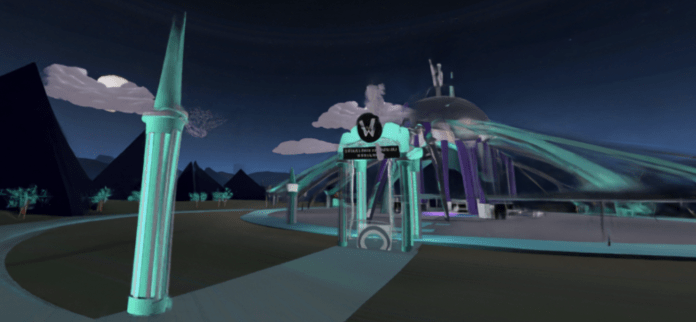
Gaussian rendition of a Horizon Worlds space generated in Marble by World Labs

Here are some specific practical suggestions for companies to consider—and for communities to consider demanding from the virtual world platforms they’re supporting: 

  • Enable integration with Discord and other third party social platforms: Giving virtual world communities easy means to communicate with each other outside the immersive space is crucial for growing virtual world usage, enabling people to remain lightly engaged while away from their main device. It’s also a great way of helping ensure that these communities can persist even if a particular world is sunsetted. (As a promising example, VRChat recently enabled deep integration with Discord.)
  • Favor architectures that are open, portable, and independently hostable: Examples include self-hosted platforms like OpenSimulator and Overte, browser-based systems like Mozilla Hubs and Custom WebXR, and open engines like Godot. These approaches do not eliminate fragility, but they reduce dependence on a single corporate owner and improve the chances that worlds, objects, and communities can persist, migrate, or be reconstructed.
  • Explore Gaussian Splats and other export technology: While Unity-based virtual worlds enable some offline/backup capabilities, we need solutions which work across the many 3D engines on the market. We are seeing some promise with Gaussian Splat-based recreations of virtual world spaces. As an example, my team created this experimental Gaussian render of the Horizon Worlds central hub on Marble, the new platform from WorldLabs. 

My own organization, the Virtual Worlds Museum, was founded to help encourage virtual worlds preservation through documentation, exhibits, and community storytelling. Our Sunset Exhibit preserves the memory of worlds that have disappeared, and our Teleportal helps visitors discover virtual worlds across the ecosystem. To better rally the virtual world community before Rec Room’s demise, we recently launched this crowdfunder to support these efforts.  

But preservation alone is not enough. If the immersive industry wants to mature, it must begin treating virtual worlds not as disposable experiments, but as cultural spaces with legacies, responsibilities, and communities worth protecting. Because when a virtual world sunsets, what we lose is not only a platform. We lose a piece of human history written in digital space.

And if we choose to preserve that history, honor those communities, and build better paths forward, their light can still guide the future of virtual worlds.

Filed Under: Guest Articles, XR Industry News

Anduril Shows a Glimpse of EagleEye’s Wide Field-of-view Night Vision Imaging

May 22, 2026 From roadtovr

Palmer Luckey, founder of defense startup Anduril, revealed more capabilities of its EagleEye XR glasses, this time showing off its wide field-of-view (FOV) night vision.

Anduril revealed EagleEye late last year, showing off an impressive (if not outright terrifying) set of augmented reality capabilities the company hopes to eventually serve up to U.S. soldiers. Luckey, who also founded Oculus in 2013, has now showed off a little more of the system’s night vision.

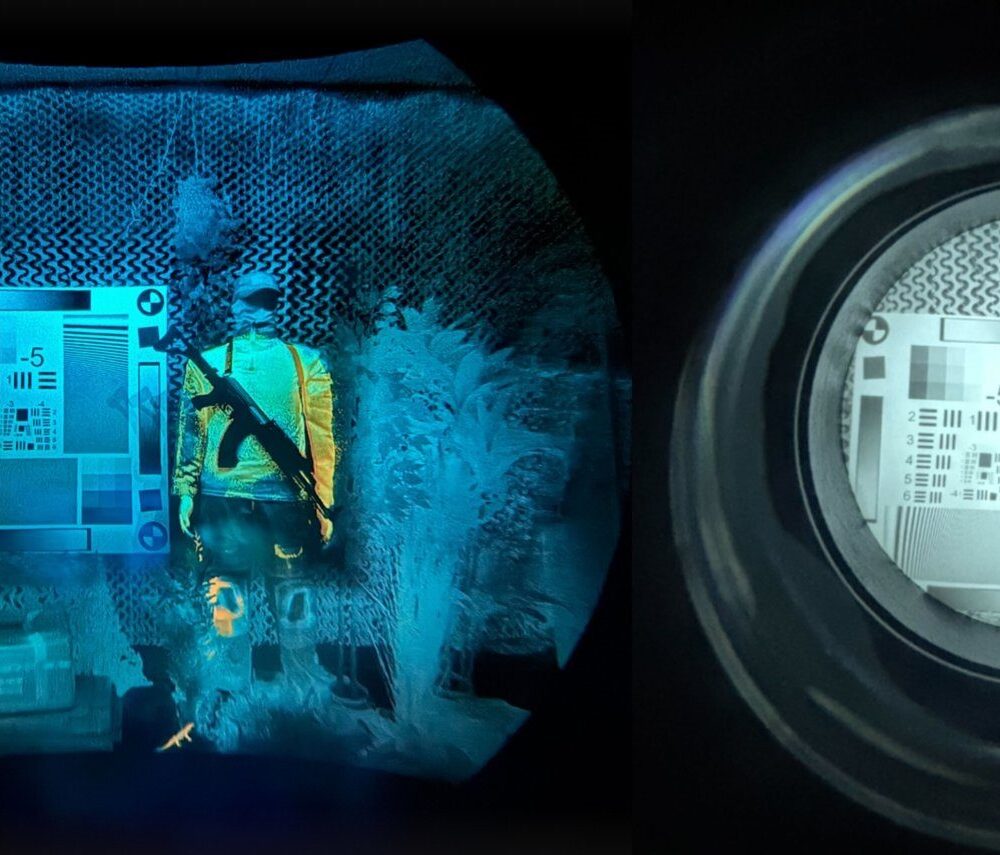
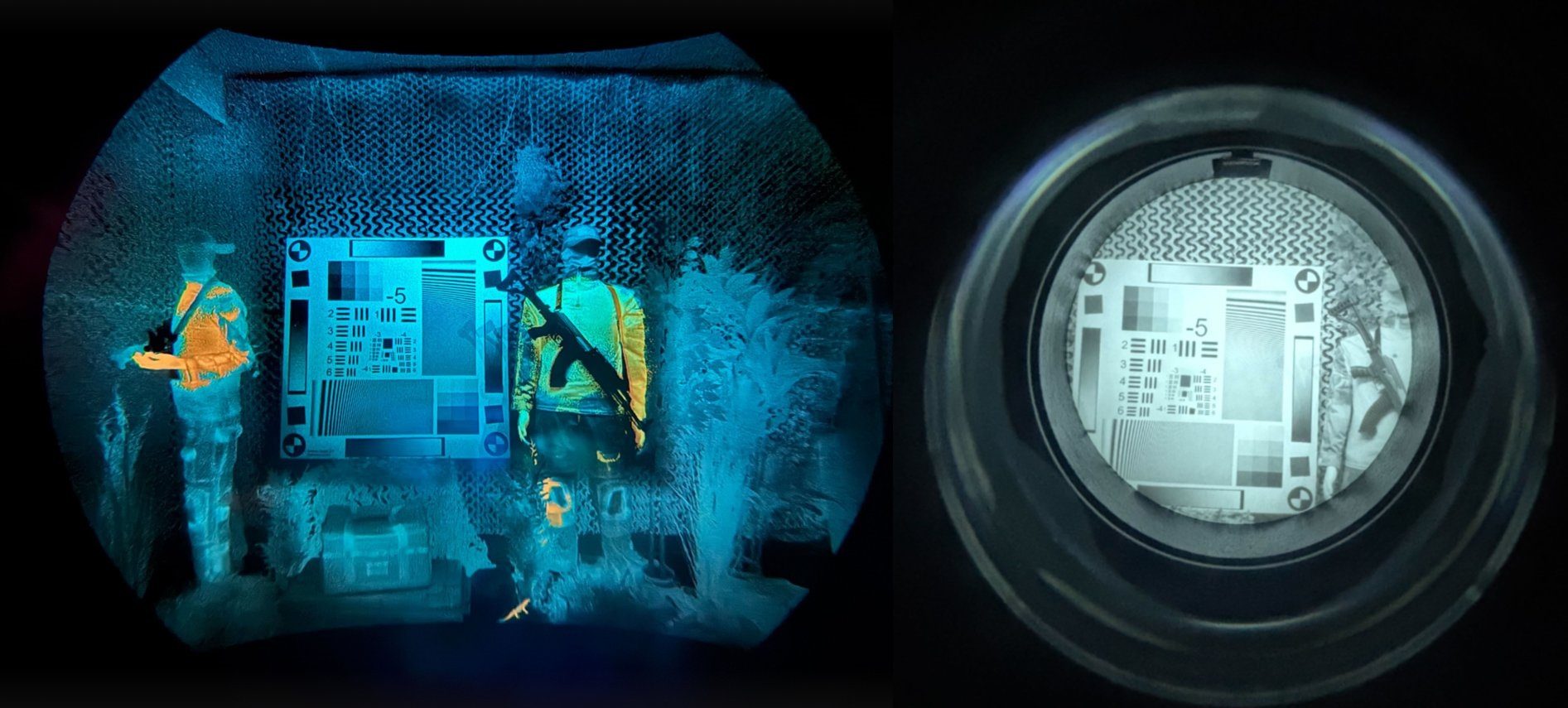
“The difference is night and day,” Luckey says in an X post. “The digital night vision of the EagleEye Family of Systems delivers an 84 degree field of view, stereo thermal fusion to expose hidden threats, and a 4K display for enhanced warfighter perception.”

Image courtesy Palmer Luckey, Anduril

Luckey also showed off a visual comparison between EagleEye (left) and PVS-31 (right), the latter of which is a conventional binocular-style night vision system currently used in elite combat roles, such as SOCOM, Rangers, SEALs, and MARSOC.

That said, the two systems are very different—about as far from each other as a smartphone is from and a digital Casio watch.

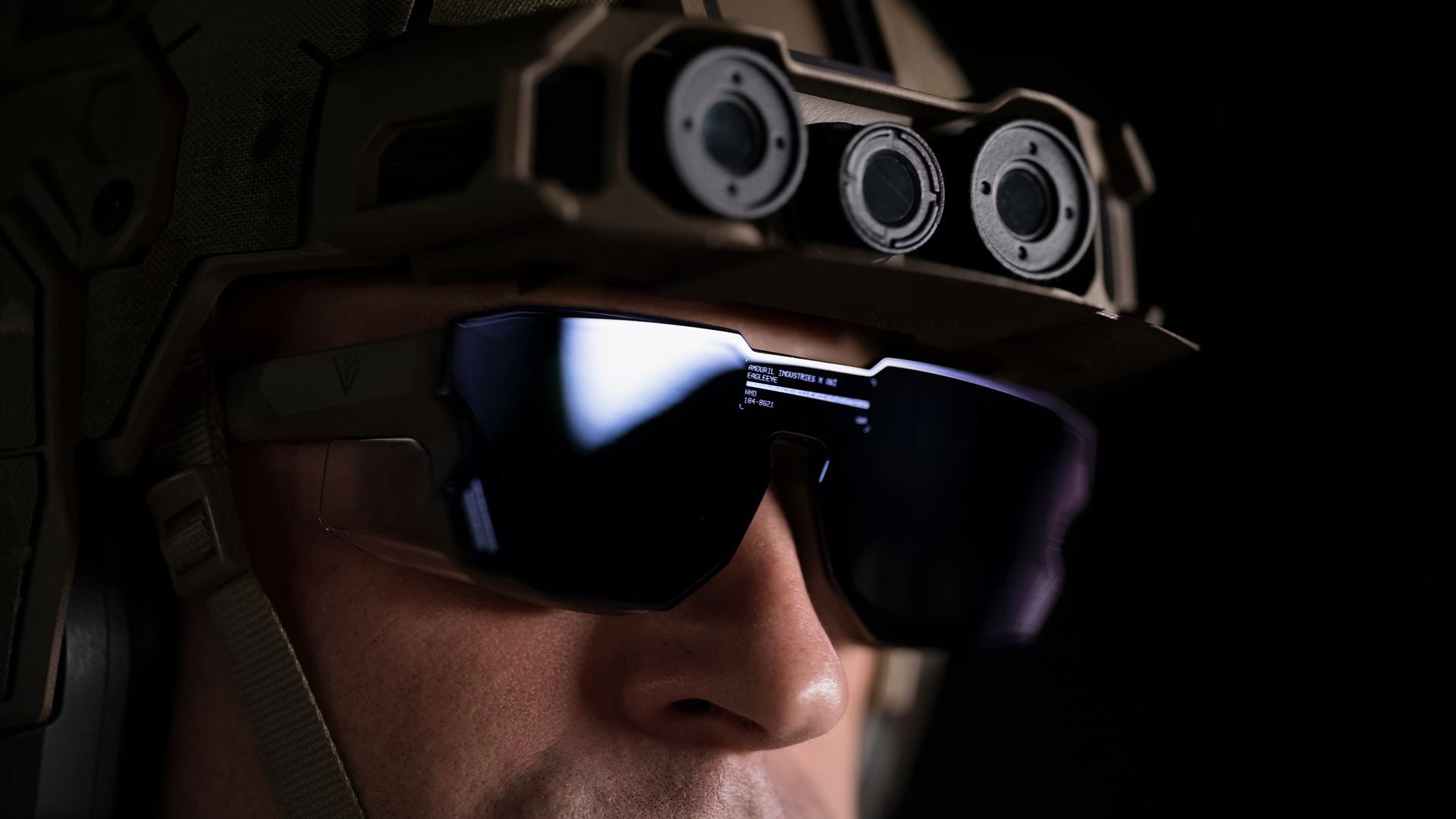
According to Anduril, EagleEye offloads some of front-heaviness of its low light and thermal sensors by integrating them into a sensor suite connected directly to the helmet, which is then relayed to the user’s display, which is housed in a pair of AR glasses with included ballistic and laser protection.

Image courtesy Anduril Industriesduri

What’s more, the system also patches into a bevy of external data streams, including real-time info sourced from the company’s AI-driven Lattice network of surveillance and defense devices.

This comes amid Anduril’s compete for a U.S. Army contract against defense company rival Rivet. Called the Soldier Borne Mission Command (SBMC), the new contract is essentially is set to revamp the previous 10-year, $22 billion Integrated Visual Augmentation System (IVAS) project originally awarded to Microsoft in 2018, which the company hoped to fulfill by adapting its HoloLens 2 AR platform for combat roles.

In February 2025, it was revealed Anduril would be taking over the older IVAS contract, which was thought to give the company a head start on competing for SBMC.

Notably, Anduril partnered with Meta in May 2025 on combat-focused XR systems, which at the time the companies said would aim to deliver “the world’s best AR and VR systems for the U.S. military.”

Anduril says it’s also partnered with EssilorLuxottica’s Oakley Standard Issue, Qualcomm, and Gentex, which the company says “lowers cost, accelerates development, and ensures a path for continuous innovation.”

Filed Under: AR Development, ar industry, News, XR Industry News

‘Avatar: Fire and Ash’ and ‘Super Mario Galaxy Movie’ Head to Vision Pro in 3D

May 21, 2026 From roadtovr

Vision Pro is steadily becoming the premier destination for 3D theatrical releases to reach home audiences. The latest 3D movies headed to Vision Pro include The Super Mario Galaxy Movie (2026) and Avatar: Fire and Ash (2025).

The News

Apple has confirmed two new 3D movies headed to Vision Pro. The Super Mario Galaxy Movie (2026) is available to buy or rent in 3D as of this week, through the Apple TV app.

Image courtesy Nintendo

That will be followed by the top-grossing movie of 2025, Avatar: Fire and Ash, which will be available starting on June 24th, streaming in 3D on the Disney+ app.

That’s it… that’s the news.

My Take

Vision Pro is the best way to watch 3D versions of major movies today, thanks to a combination of high-quality OLED displays and ease-of-access to high-quality 3D content. 3D movies on Vision Pro are generally streamed in 4K with HDR and surround sound, and you can make the screen literally as large as it would be in an actual movie theater. From my personal experience, if a movie in Vision Pro is available in 3D, there’s no reason not to watch the 3D version; it’s a pure value-add to the experience.

This follows the collapse of the 3DTV market years ago, which led to a near-elimination of movies being released in 3D for at-home viewing. Vision Pro is offering a second life to the 3D releases at home. And while the number of 3D movies available on the headset is continuing to grow, the high cost of Vision Pro makes it anything but certain that releases will continue in the long term.

Avatar: Fire and Ash, in particular, is a major win for 3D movies on the headset; Vision Pro is now the only way to experience the movie with the 3D perspective that director James Cameron originally intended it to be seen.

Granted, the release calls into question the partnership between Cameron’s Lightstorm Vision studio and Meta, which was announced at the end of 2024, a year before the release of Avatar: Fire and Ash.

At the time the studio and Meta said they were partnering to “scale the creation of world-class 3D entertainment experiences spanning live sports and concerts, feature films, and TV series featuring big-name IP on Meta Quest—which will be Lightstorm Vision’s exclusive MR hardware platform.”

While it wasn’t ever confirmed that the partnership would include a 3D release of Avatar: Fire and Ash on Meta’s headsets, the release of an exclusive 3D clip on Quest—to promote the movie’s release—certainly teased as much. But at this point it’s unclear if the movie will be released in 3D on Quest like on Vision Pro. We reached out to Meta about this but the company didn’t respond to a request for comment.

Filed Under: Apple Vision Pro News & Reviews, News

Apple Acquires Key Talent & Patents Behind AI Avatar Company ‘Animato’

May 20, 2026 From roadtovr

According to an official EU filing spotted by Apple Insider, Apple has recently acquired key talent and IP behind Animato, a Bay Area startup creating AI avatars.

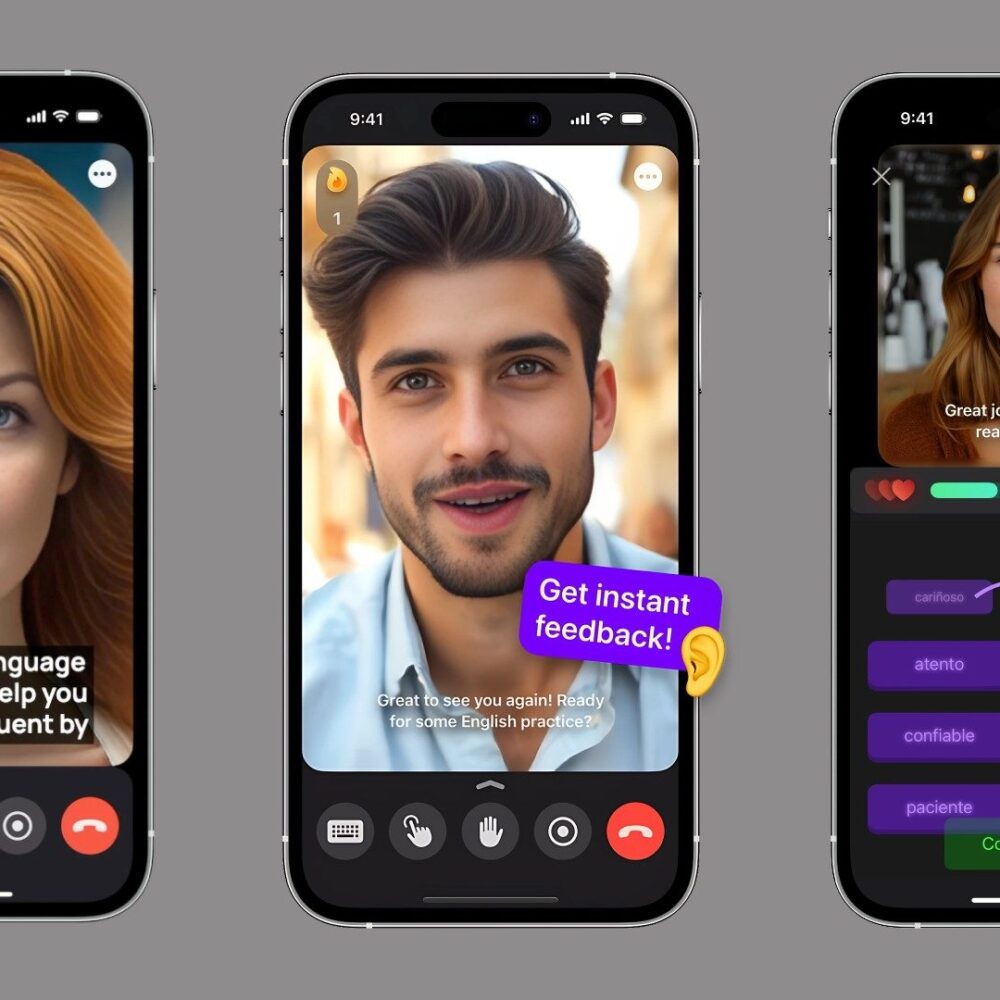
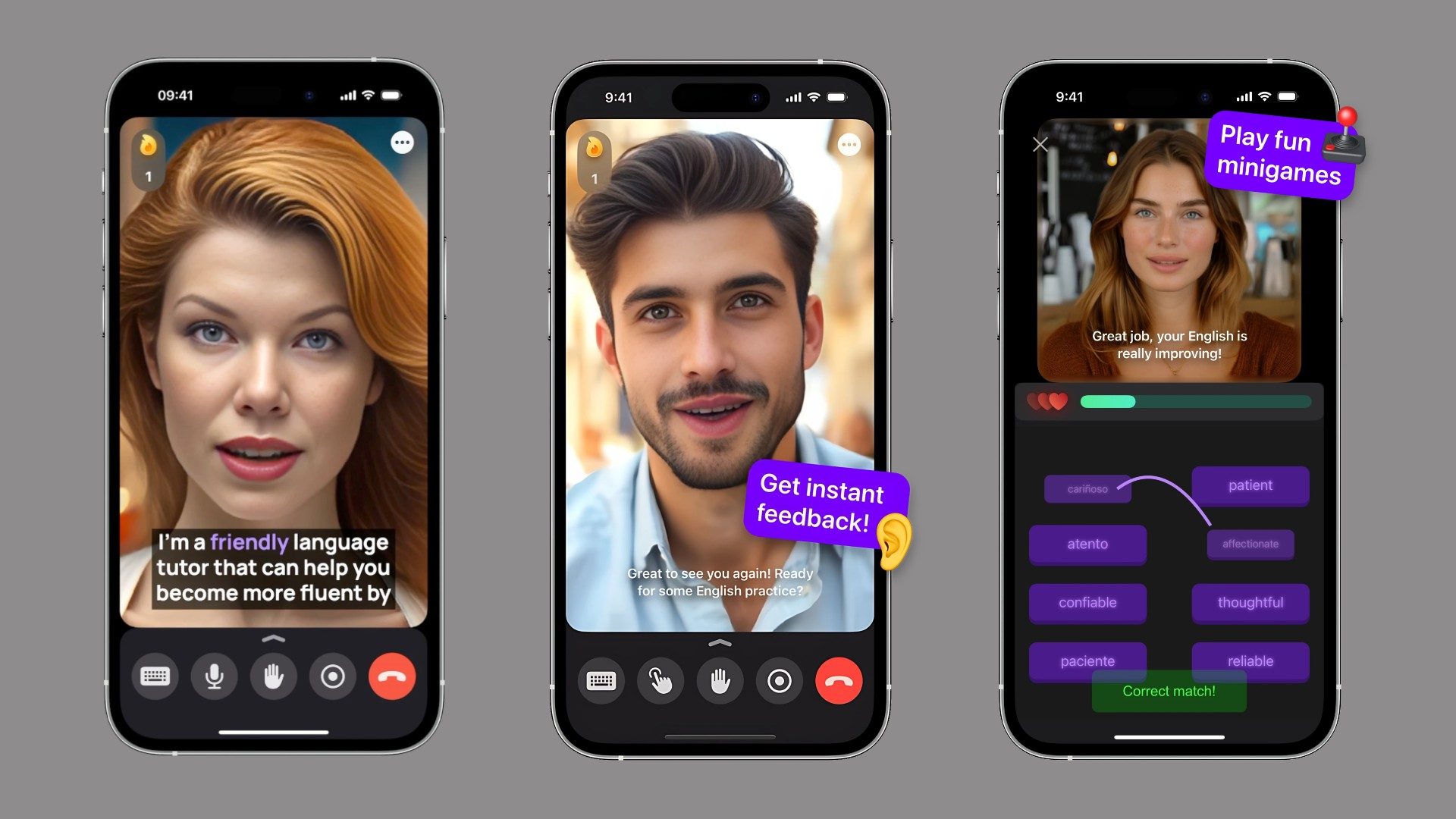
Animato was known for the now-defunct AI video calling app Call Annie, which paired 3D avatars with AI for face-to-face tutoring and language learning.

According to the filing (seen below), Apple isn’t outright acquiring Animato, but rather reserving the right to hire certain employees, get non-exclusive licenses to Animato’s intellectual property rights, and acquire Animato’s patent applications.

Here’s the January 19th filing via the European Commission’s Digital Markets Act:

Apple Inc. (“Apple”) will have the right to make employment offers to and hire certain employees of Animato, Inc. (“Animato”), receive a non-exclusive license to Animato’s intellectual property rights, and acquire Animato’s patent applications. Animato develops and distributes software that creates virtual avatars for video chats and tutoring. Apple (together with its group companies) designs, manufactures and markets smartphones, personal computers, tablets, wearables and accessories, and sells a variety of related services.

According to LinkedIn, Animato was founded by Francesco Rossi, who worked at Apple from 2015-2022 in the company’s computer vision R&D department, which included work on machine learning.

Having left Apple in 2022 to found Animato, the company released two now-defunct apps, Call Annie and BeSanta, the latter of which let users create impersonate Santa Claus and record videos for playback.

‘Call Annie’ | Images courtesy Animato Inc

This isn’t the first avatar-related acquisition (or in Animato’s case acqui-hire) Apple has undertaken following the 2024 launch of Vision Pro.

In early 2025, Apple quietly acquired 3D avatar company TrueMeeting, having obtained its 3D avatar tech stack and a number of its employees. At the time, the deal was thought to support the company’s photorealistic avatars for Vision Pro, aka ‘Personas’.

Notably, Personas are some of the most realistic 3D avatars in the XR space right now. Based on facial scans, Personas are animated with the help of Vision Pro’s various sensors; the downward-facing camera tracks mouth movement, internal sensors track your eyes and facial micro-expressions, and a particularly advanced machine learning stack blends all of this together into a realistic 3D avatar.

At least in terms of what we’ve seen in Call Annie, Animato’s tech seems to be more targeted at creating realistic AI avatars, which is something Apple may be after as the company further develops not only XR headsets like Vision Pro, but its forthcoming AR glasses, which are rumored to follow its first smart glasses—still in development behind closed doors.

Filed Under: Apple Vision Pro News & Reviews, News

Google Announces New Android XR Developer Program with AR Glasses Dev Kits

May 19, 2026 From roadtovr

Google today announced at its I/O developer conference that it’s launching a new Android XR developer program, which will include XREAL’s upcoming AR glasses.

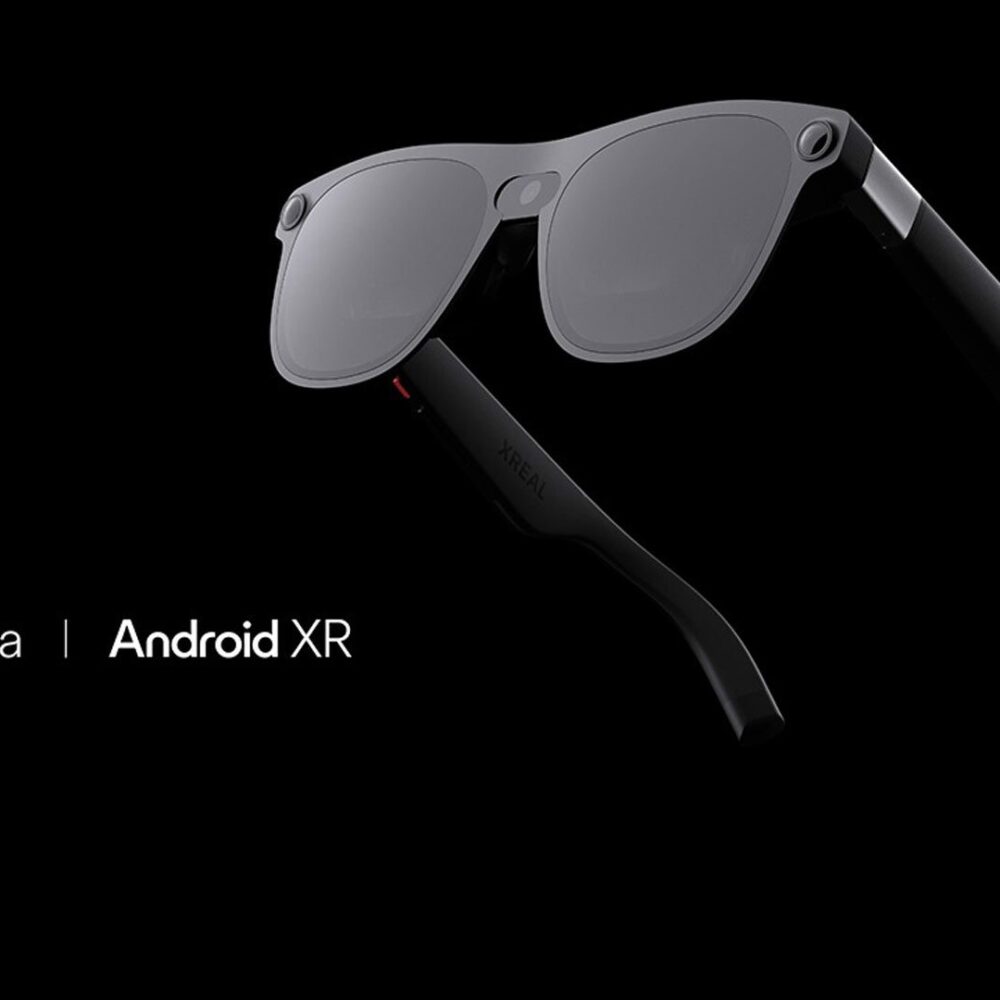
Called the ‘Android XR Developer Catalyst Program’, Google and AR hardware partner Xreal say they’ll be seeding program applicants with Project Aura dev kits, as well as tools and additional resources to get them creating fresh XR content.

Project Aura is the first pair of AR glasses running Google’s Android XR operating system, which the companies confirmed will ship sometime this year.

XREAL Project Aura | Image courtesy XREAL

“As part of the program, Project Aura developer kits will become available globally, giving select developers early access to hardware along with tools and resources designed specifically for Android XR development on Project Aura,” Xreal and Google said.

“The goal is simple: empower developers to start building the XR apps and experiences they’ve always imagined.”

Developers hoping to join the program can apply today at g.co/dev/catalyst, and Google/Xreal will review submissions and provide Project Aura developer kits in the coming weeks.

Filed Under: AR Development, News, XR Industry News

Google & Samsung Reveal Smart Glasses for Fall Launch, Aiming to go Head-to-head with Meta

May 19, 2026 From roadtovr

Google and Samsung today gave the first official glimpse of an upcoming pair of smart glasses which are set to go head-to-head with Meta’s own AI-based smart glasses.

The News

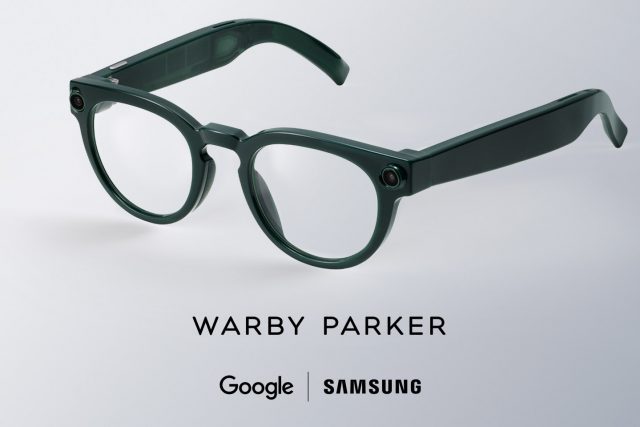
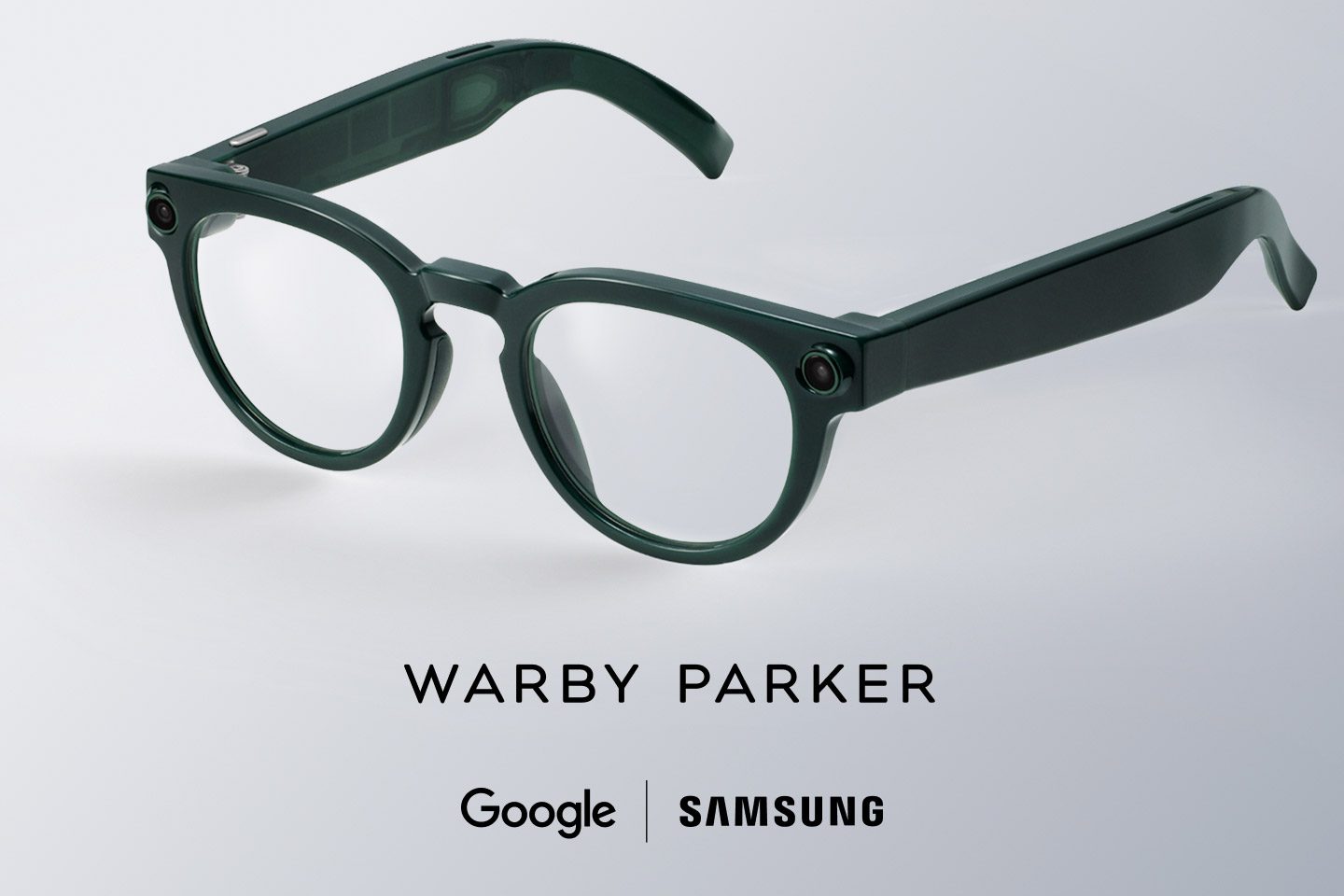
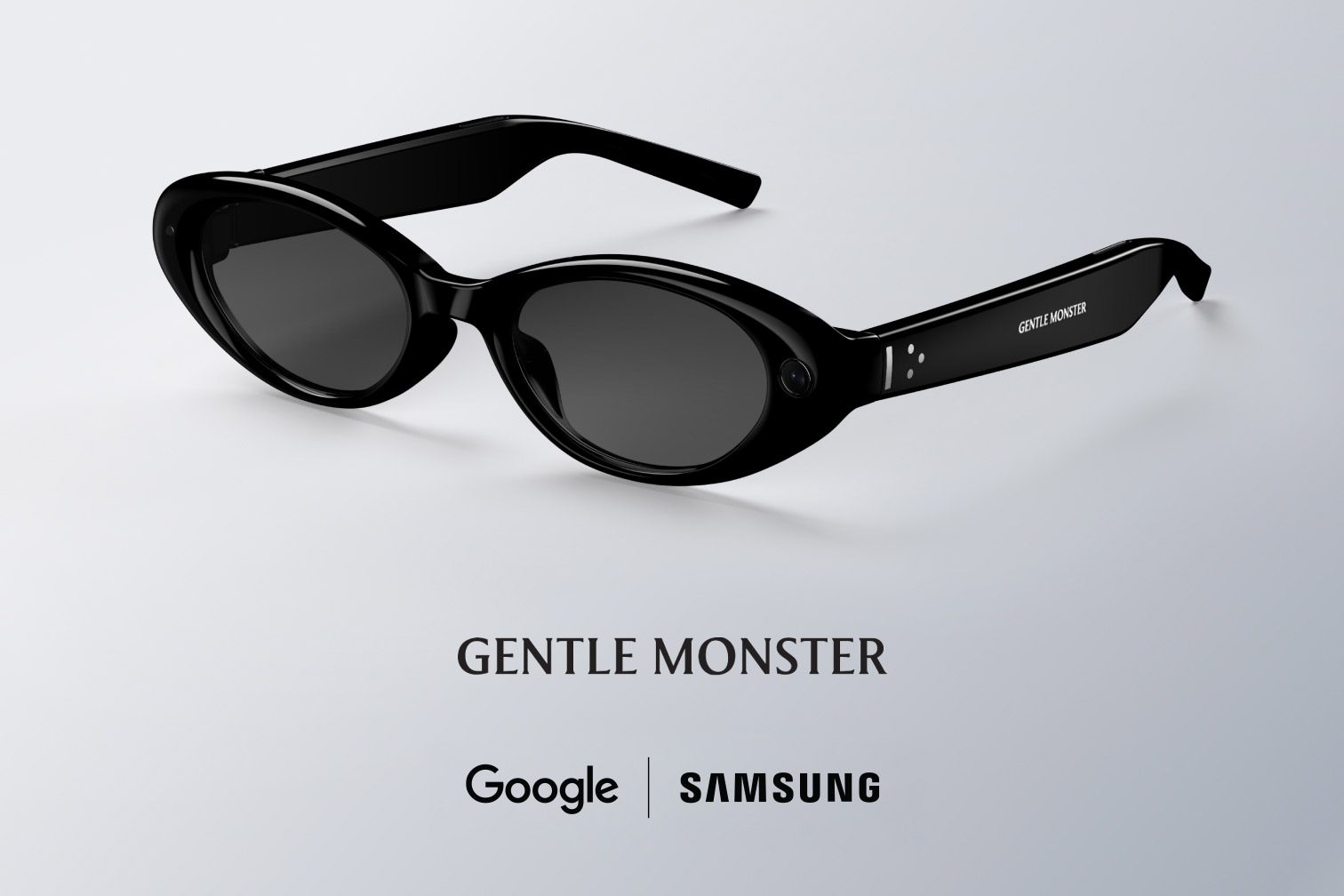
The new smart glasses revealed by the companies at Google I/O today are seemingly unnamed at this point but generally referred to as “intelligent eyewear.” Like most of Meta’s smart glasses lineup, this pair is limited to audio input & output. A camera exists for visual input, but there’s no built-in display for visual output, unlike Meta’s Ray-Ban Display glasses.

Image courtesy Google & Samsung

The new smart glasses from Google and Samsung come in two styles: one made in collaboration with eyewear brand Warby Parker and another made in collaboration with Gentle Monster. Last year Google reportedly invested $100 million in Gentle Monster as part of its growing smart glasses ambitions.

Image courtesy Google & Samsung

Google and Samsung say the glasses are designed to work as a companion device to a mobile phone—similar to Meta’s smart glasses—suggesting it will have limited capabilities when worn by itself. As part of the announcement, the companies offered a tease of the device’s capabilities:

Users can access navigation assistance by simply asking Gemini with their voices, receive personalized suggestions such as a nearby coffee shop on their walking route, or even place an order for pickup. Users can also receive summarized notifications for important texts and add events to their calendars. Additional features include real-time translations with audio that matches the speaker’s voice, as well as the ability to translate text on menus or signs in the user’s line of sight. Working seamlessly within the Galaxy ecosystem, the device helps users easily manage everyday tasks or effortlessly capture photos, all without taking their phone out.

Pricing and detailed specs have not been announced at this time, though the companies say the Google and Samsung smart glasses will launch this Fall “in select markets.”

My Take

Meta has already been seen to double-down on its smart glasses business after seeing greater than expected adoption, and this announcement of new smart glasses coming from Google and Samsung shows a growing belief in head-worn devices as the ideal place to capitalize on increasingly useful AI agents that have motivated the tech sector in recent years.

While the initial focus is on audio as the primary output modality of these glasses, Google has already confirmed its intentions to also bring smart glasses with displays to market, though it’s unclear if that will happen in 2026 or beyond. Adding a display to smart glasses vastly increases its range of uses, but adds significant cost and UX complexity. Meta even saw the need to pair its Ray-Ban Display smart glasses with a neural control band to make it easier for users to control the glasses.

I find it interesting that Google and Samsung were ready to show the design of these upcoming smart glasses but haven’t actually given them a proper name yet. Perhaps they are aiming to call the glasses by a combination of the company name and the corresponding eyewear brand, ie: Samsung Warby Parker glasses and Samsung Gentle Monster Glasses (like Meta has done with the “Meta Ray-Ban” glasses and “Oakley Meta” glasses).

Interestingly, the announcement accompanying this news doesn’t include any mention of “Android XR,” which tells us that Google is likely to position smart glasses separately from more immersive and interactive AR glasses like those coming from XREAL.

It’s been nearly 14 years since Google introduced its first pair of smart glasses, Google Glass. Equipped with significantly more advanced AI capabilities and a form-factor that looks much closer to actual glasses, this era of smart glasses has a much better chance of taking off.

Filed Under: Android XR News & Reviews, News, XR Industry News

« Previous Page
Next Page »

  • Home