• Skip to primary navigation
  • Skip to main content

VRSUN

Hot Virtual Reality News

HOTTEST VR NEWS OF THE DAY

  • Home

Android XR News & Reviews

Google & Samsung Reveal Smart Glasses for Fall Launch, Aiming to go Head-to-head with Meta

May 19, 2026 From roadtovr

Google and Samsung today gave the first official glimpse of an upcoming pair of smart glasses which are set to go head-to-head with Meta’s own AI-based smart glasses.

The News

The new smart glasses revealed by the companies at Google I/O today are seemingly unnamed at this point but generally referred to as “intelligent eyewear.” Like most of Meta’s smart glasses lineup, this pair is limited to audio input & output. A camera exists for visual input, but there’s no built-in display for visual output, unlike Meta’s Ray-Ban Display glasses.

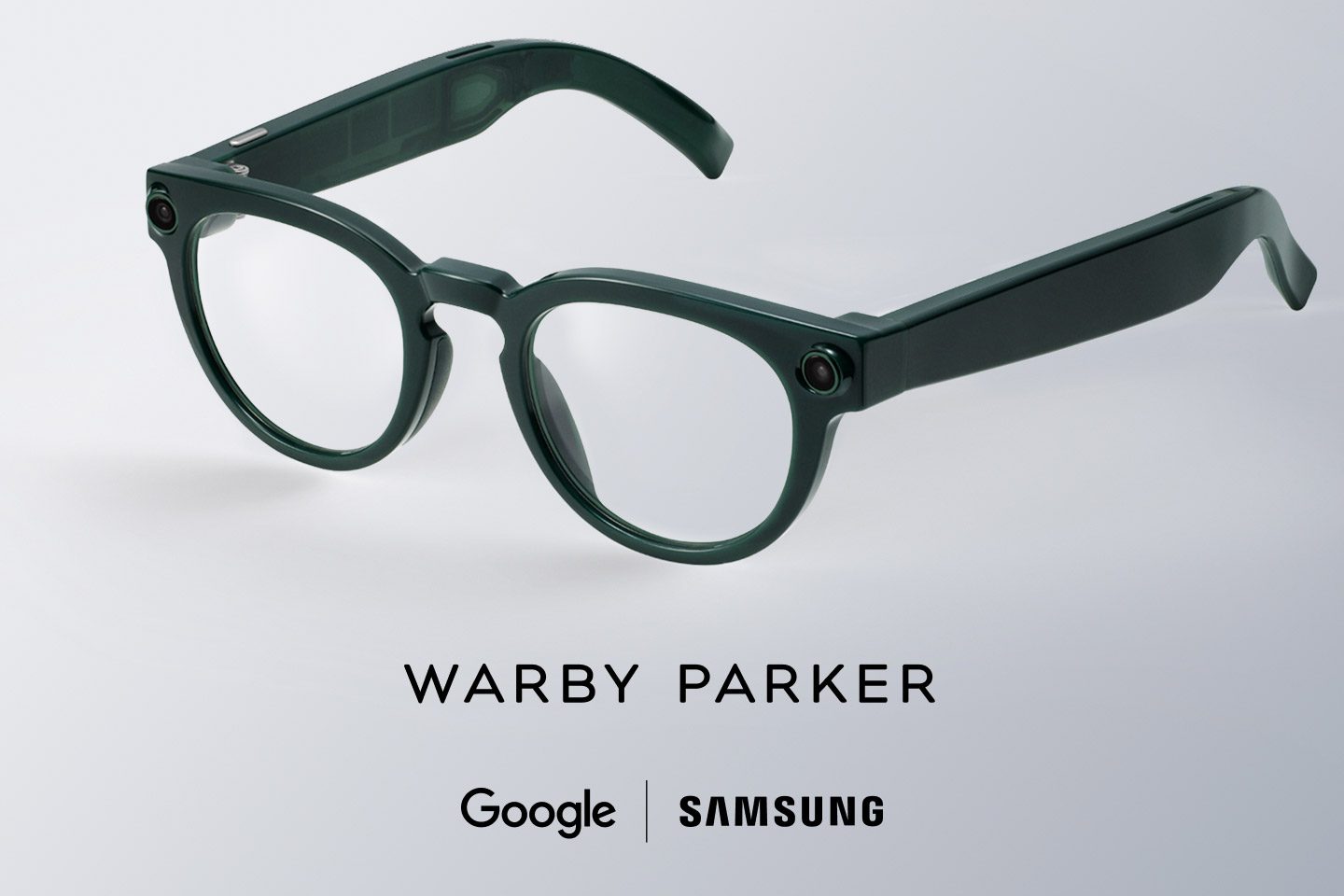
Image courtesy Google & Samsung

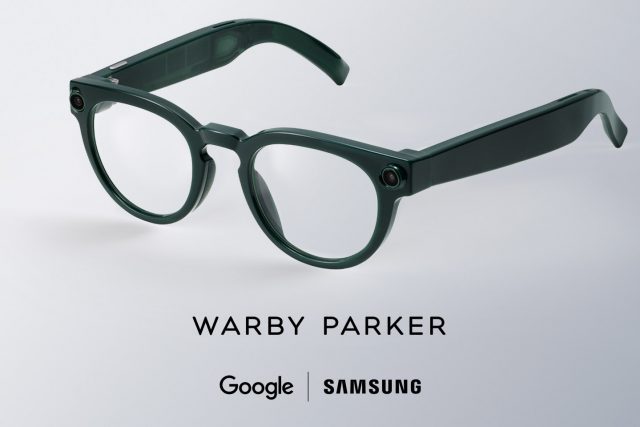
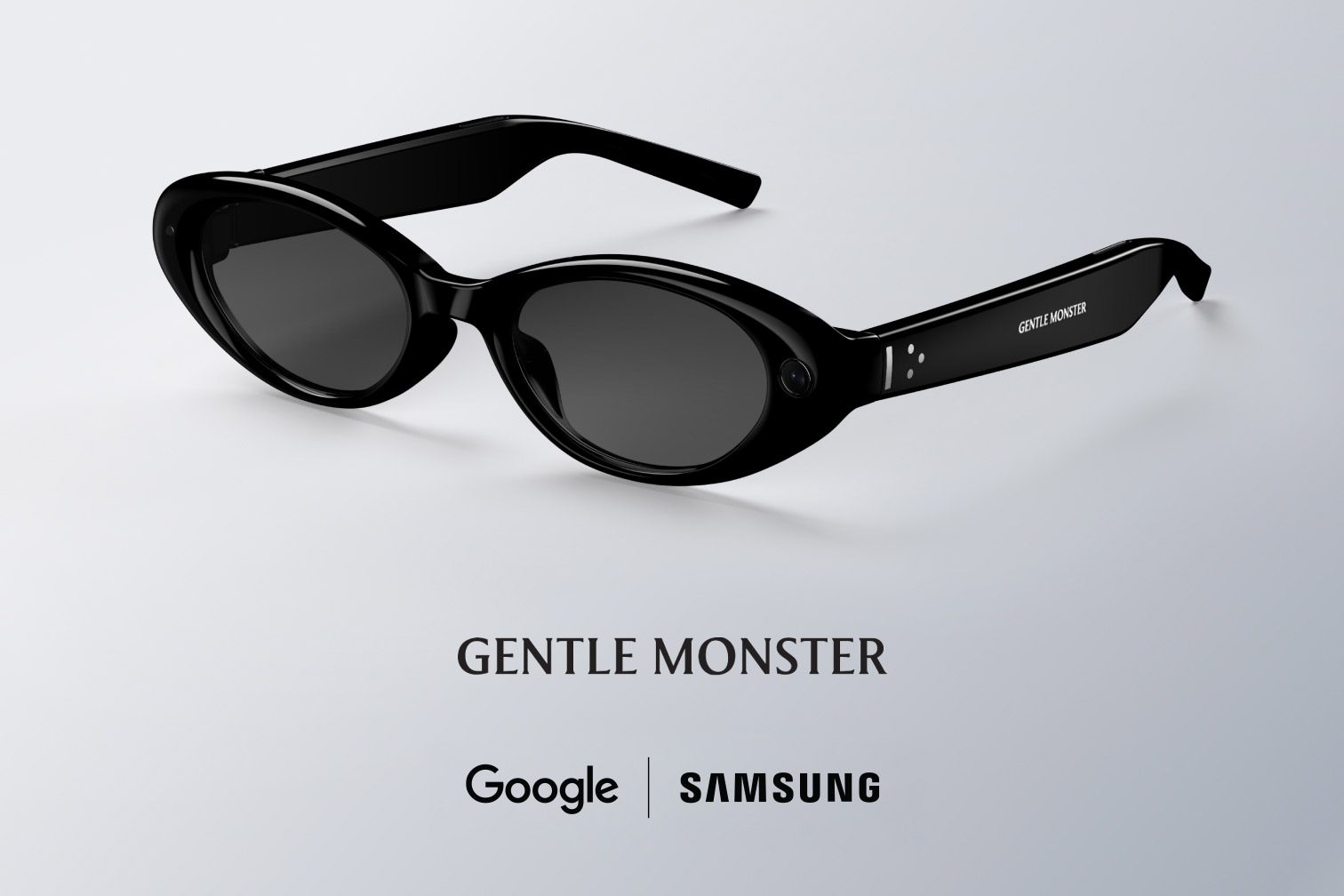
The new smart glasses from Google and Samsung come in two styles: one made in collaboration with eyewear brand Warby Parker and another made in collaboration with Gentle Monster. Last year Google reportedly invested $100 million in Gentle Monster as part of its growing smart glasses ambitions.

Image courtesy Google & Samsung

Google and Samsung say the glasses are designed to work as a companion device to a mobile phone—similar to Meta’s smart glasses—suggesting it will have limited capabilities when worn by itself. As part of the announcement, the companies offered a tease of the device’s capabilities:

Users can access navigation assistance by simply asking Gemini with their voices, receive personalized suggestions such as a nearby coffee shop on their walking route, or even place an order for pickup. Users can also receive summarized notifications for important texts and add events to their calendars. Additional features include real-time translations with audio that matches the speaker’s voice, as well as the ability to translate text on menus or signs in the user’s line of sight. Working seamlessly within the Galaxy ecosystem, the device helps users easily manage everyday tasks or effortlessly capture photos, all without taking their phone out.

Pricing and detailed specs have not been announced at this time, though the companies say the Google and Samsung smart glasses will launch this Fall “in select markets.”

My Take

Meta has already been seen to double-down on its smart glasses business after seeing greater than expected adoption, and this announcement of new smart glasses coming from Google and Samsung shows a growing belief in head-worn devices as the ideal place to capitalize on increasingly useful AI agents that have motivated the tech sector in recent years.

While the initial focus is on audio as the primary output modality of these glasses, Google has already confirmed its intentions to also bring smart glasses with displays to market, though it’s unclear if that will happen in 2026 or beyond. Adding a display to smart glasses vastly increases its range of uses, but adds significant cost and UX complexity. Meta even saw the need to pair its Ray-Ban Display smart glasses with a neural control band to make it easier for users to control the glasses.

I find it interesting that Google and Samsung were ready to show the design of these upcoming smart glasses but haven’t actually given them a proper name yet. Perhaps they are aiming to call the glasses by a combination of the company name and the corresponding eyewear brand, ie: Samsung Warby Parker glasses and Samsung Gentle Monster Glasses (like Meta has done with the “Meta Ray-Ban” glasses and “Oakley Meta” glasses).

Interestingly, the announcement accompanying this news doesn’t include any mention of “Android XR,” which tells us that Google is likely to position smart glasses separately from more immersive and interactive AR glasses like those coming from XREAL.

It’s been nearly 14 years since Google introduced its first pair of smart glasses, Google Glass. Equipped with significantly more advanced AI capabilities and a form-factor that looks much closer to actual glasses, this era of smart glasses has a much better chance of taking off.

Filed Under: Android XR News & Reviews, News, XR Industry News

Samsung Reportedly Working on More Advanced Smart Glasses, Possibly Including a Display

April 23, 2026 From roadtovr

Samsung is reportedly working on a pair of smart glasses that could be more advanced than its forthcoming competitors to Ray-Ban Meta.

Android Authority maintains it’s found evidence of a third pair of smart glasses in the source code of Samsung’s upcoming One UI 9 firmware, revealing a new model number: ‘SM-O500’, code named ‘Haean’.

Notably, two model numbers are already known: ‘SM-O200P’ and ‘SM-O200J’, code named ‘Jinju’, which are likely to be associated with the Android XR-based smart glasses Samsung recently confirmed will release sometime this year.

Those are expected to be similar to Ray-Ban Meta, in that they’ll essentially be ‘audio-only’, including microphones, camera, speakers, but no form of display.

Prototype Android XR smartglasses | Image courtesy Google

As SM-O500 follows the same numbering and lettering scheme as those two known smart glasses models, it could indicate Samsung is already working on ecosystem support for the ostensible next-gen device.

Based off prior rumors, SamMobile further suggests it may even be a display-clad version coming in 2027, similar to Meta Ray-Ban Display ($800) released late last year in the US.

Granted, as Android Authority notes, its source code sweep of One UI 9 isn’t a smoking gun. APK teardowns of the sort can be useful in revealing future releases, but may also not make it to a public release.

What we do know thus far: Google, the creator of Android XR, announced last year it was partnering with Samsung as well as Gentle Monster and US-based eyewear brand Warby Parker to release the company’s first generation of Android XR-based smart glasses.

Google also hopes to release a model with built-in displays for visual output. The company showed off two prototypes last year, including both a monocular and stereoscopic model to demonstrate Android XR’s ability to adapt to multiple hardware configurations.

Still, there’s no release date in sight for any of the Android XR-running smart glasses. The inclusion of ecosystem tie-ins in One UI 9 (based on Android 17) could mean we’ll find out more soon, however. Android 17 is expected to release in June 2026, with One UI 9 expected a month later, which could hold more clues.

Filed Under: Android XR News & Reviews, AR Development, ar industry, News, XR Industry News

Android XR Update Adds Deep Enterprise Support, Auto-3D Conversion & More

April 9, 2026 From roadtovr

Samsung and Google announced a major software update to Galaxy XR, the Android XR-based headset, which includes deep enterprise support, automatic 3D conversion of photos and videos, and more.

One of the biggest bits in the update, now available on Samsung Galaxy XR, is the inclusion of Android Enterprise, the Google-led initiative that includes built-in security, management, and app deployment tools for workplace-focused Android devices.

This includes support for fully managed deployments with flexible enrollment options like zero-touch, QR setup, and DPC provisioning, aimed at making large-scale rollouts easier.

It also includes enterprise app management, robust device controls, and hardware-level security to protect sensitive data and meet compliance standards, the company says in a press statement.

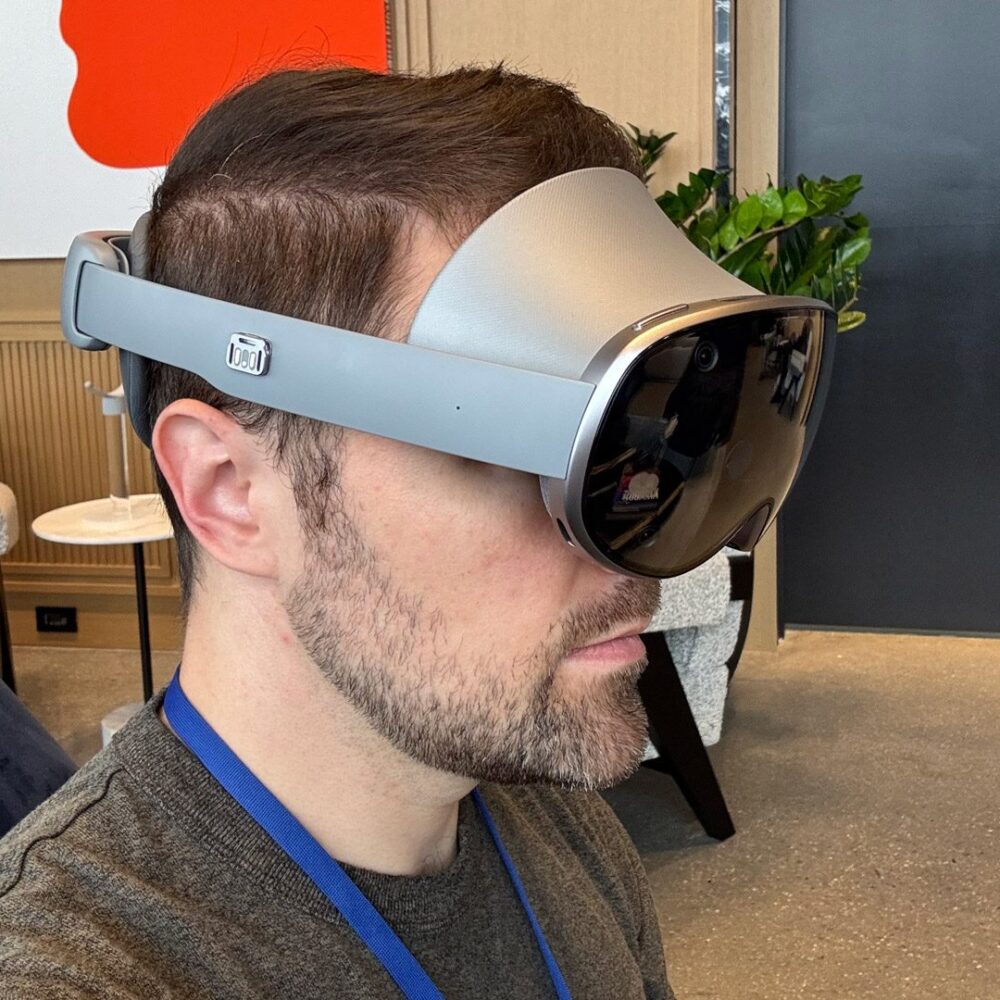
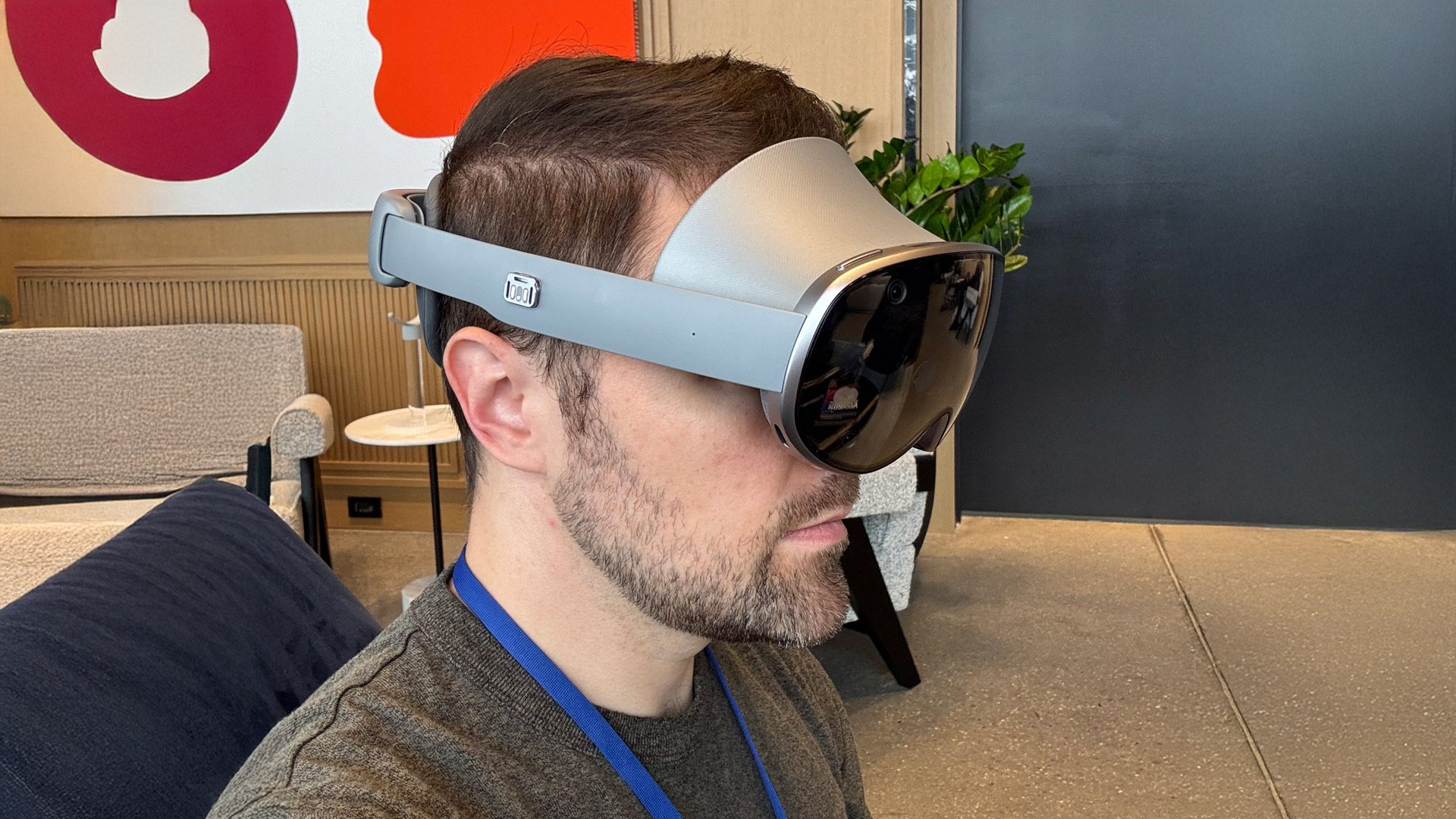
Photo by Road to VR

In addition to enterprise features, the latest Android XR update also includes improvements targeting everyday usability, such as customizable virtual keyboard positioning, desktop session restore for up to three apps after reboot, expanded accessibility tools such as single-eye tracking, and improved spatial alignment of on-screen content.

What’s more, the Android XR update now brings auto spatialization to Chrome and YouTube, which automatically converts 2D media into immersive 3D experiences. This comes in addition to the previously available auto spatalization feature for Google Photos.

Notably, as a part of the new update, Android XR is now set to receive regular software updates, including security patches, for up to five years.

Released in October 2025 for $1,800, Samsung Galaxy XR looks to fill a middle ground of price and features between Meta Quest 3 ($500) and Apple Vision Pro ($3,500).

Much like how Vision Pro taps into the library of iOS apps in addition to native visionOS apps, Android XR-based Galaxy XR makes use of Android’s vast app ecosystem. Still, Galaxy XR is only the first full-feature XR headset to adopt Android XR, seems to be filling out software features as we speak.

Filed Under: Android XR News & Reviews, News, VR Development, XR Industry News

Google is Rolling out Photorealistic ‘Likeness’ Avatars on Android XR to Compete with Apple’s ‘Personas’

December 11, 2025 From roadtovr

Google is starting to roll out new photorealistic avatars which they call “Likeness”. Similar to Apple’s Personas, Likeness avatars are generated by scanning a user’s face, then animated it with input from the sensors on a headset. The avatars can be used to represent the user in video call apps, but Google doesn’t yet have a way to have spatial meetings with other Likeness avatars.

The News

Google is launching its own photorealistic avatars called Likeness avatars, for use on compatible Android XR headsets. The idea is similar to Apple’s Persona avatars: scan the user’s face to create a realistic representation, then use the headset’s on-board cameras to animate the scan as realistically as possible.

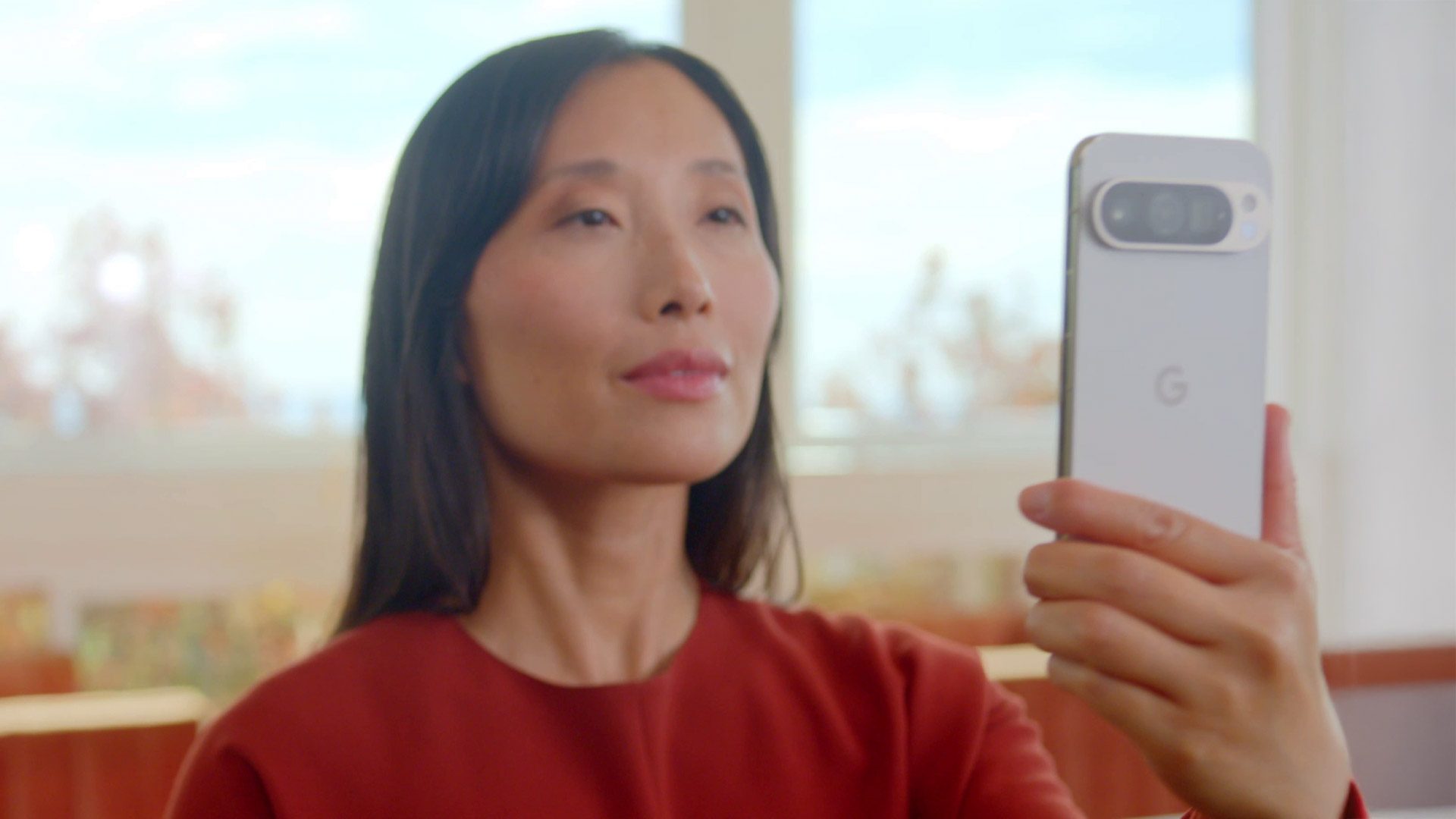
Likenesses take a slightly different (and probably more user-friendly) approach for the initial face scan; rather than scanning by holding a headset out in front of your face, Google instead released a Likeness (beta) Android app to let people scan themselves with their phone instead. Holding your phone in front of your face for a scan is definitely a bit easier than awkwardly holding a whole headset with both hands.

According to Google, the Likeness (beta) app is only compatible with Google Pixel 8 or newer, Samsung Galaxy S23 or newer, or Samsung Z Fold5 or newer. Without a compatible device, you can’t create a Likeness avatar, meaning Android XR users with an iPhone (or unsupported Android phone) won’t be able to scan themselves. One benefit of Apple’s approach to scanning with the headset itself is that anyone can use a Persona avatar on Vision Pro regardless of what kind of phone they have.

Image courtesy Google

Like Apple’s approach, Likeness avatars can be used generically as a ‘virtual webcam’. That makes them widely compatible with most video call apps that expect a front-facing camera, like Google Meet, Zoom, Messenger, etc.

And just like Apple, the first ‘beta’ iteration of Likeness avatars are 2D only. They are presented as a 2D representation with no way to transmit them in a spatial format, or have a ‘spatial meeting’, like Vision Pro can do with spatial FaceTime calls. However, Google says it’s working on spatial meetings for the future.

My Take

Photorealistic avatars on XR headsets are a great value-add because of the ability to use video call apps naturally. Apple’s Personas are currently the state-of-the-art as far as consumer-available photorealistic avatars, and the company has shown that it’s possible to cross over the uncanny valley with this approach to avatars.

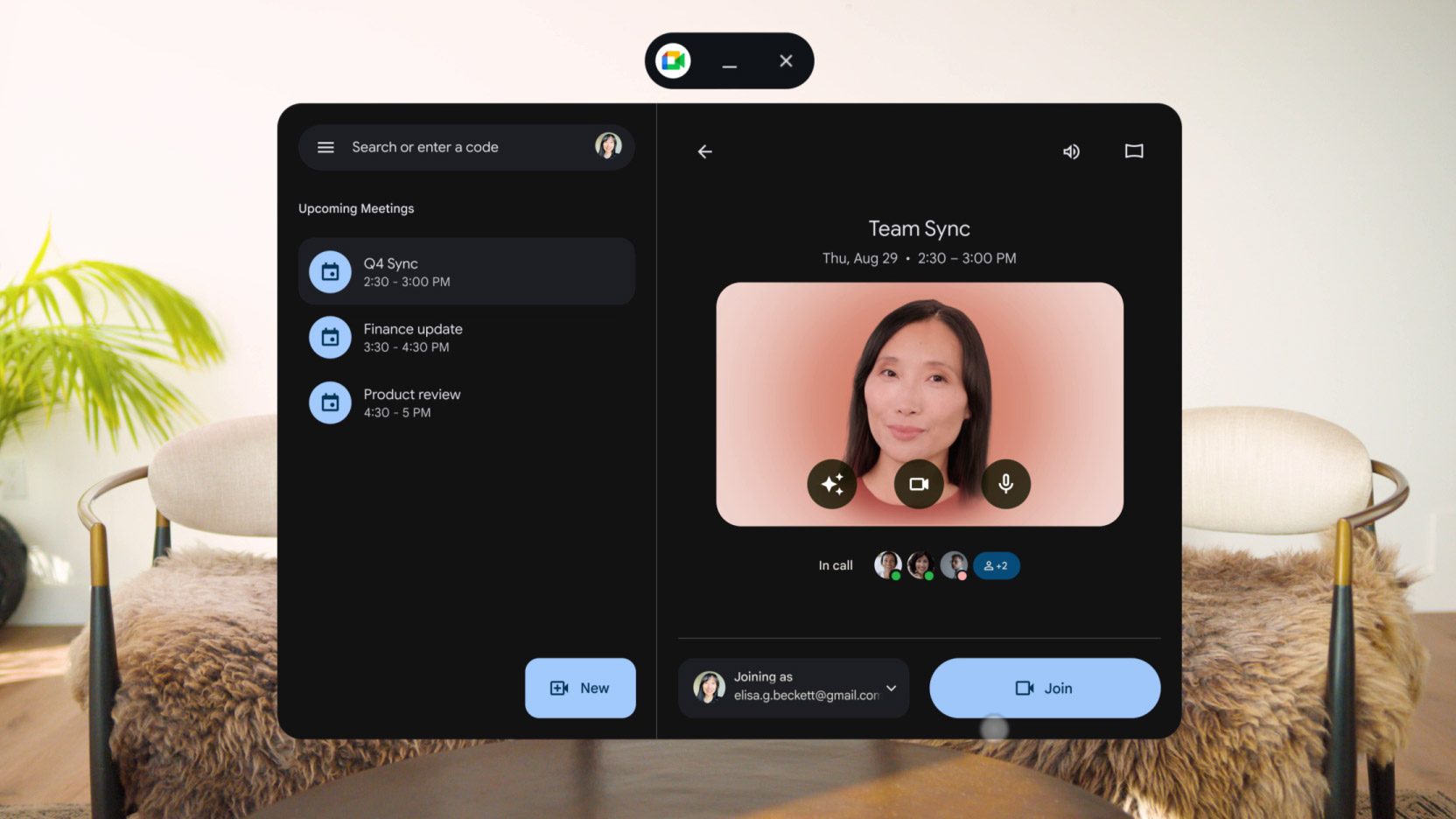
During a recent meeting with Google, I joined a demo video call on Google Meet with one of the participants using a Likeness avatar. From a photorealism standpoint, the results look impressive, and facial movements look convincing too. However, because I didn’t personally know the individual using the Likeness, I was unfamiliar with their actual idiolect, which makes it impossible for me to judge the accuracy of the facial motion. Still, facial motion only needs to be plausibly realistic to be passable in many circumstances, and that’s been achieved from what I can see.

Image courtesy Google

While it’s a bummer that there’s no ‘spatial meeting’ yet for Android XR (allowing users to chat face-to-face with fully spatial Likeness avatars), Google made the right choice in prioritizing virtual webcam usage at the start. It’s less impressive than spatial meetings, but more widely useful and compatible with existing services and apps.

There’s probably no chance we’ll see spatial calls between Likeness avatars and Persona avatars any time soon, but virtual webcam compatibility makes it trivial for both kinds of avatars to chat across headsets.

One thing worth noting is that Likeness avatars probably won’t be compatible with all Android XR devices. Forthcoming ‘Android XR’ smartglasses (which don’t run anything close to the full-blown version of Android XR) don’t have the power or sensors necessary to render or animate a Likeness avatar. Similarly, devices like XREAL Aura (which does run full-blown Android XR), might have the power but don’t have the sensors (eye and mouth tracking cameras) to animate a Likeness avatar.

It’s possible that Google could make Likeness avatars compatible with these devices by doing simulated eye movements and audio-based lip-sync. Although those technologies are already widely in use for more cartoonish avatars, they’re likely to fall deep into the uncanny valley when applied to photorealistic face scans. So I doubt Google will take that approach.

With the introduction of Likeness avatars, Google also has the same challenge I pointed out recently regarding Apple’s Persona avatars: as headsets get smaller, how will they bring this level of avatar fidelity to smaller headsets that have even less room for the cameras that are essential for these kinds of avatars?

Filed Under: Android XR News & Reviews, News, XR Industry News

  • Home