• Skip to primary navigation
  • Skip to main content

VRSUN

Hot Virtual Reality News

HOTTEST VR NEWS OF THE DAY

  • Home

vr industry

Meta Delays Puck-Tethered XR Headset to 2027, Next Quest “Large Upgrade” to Current Gen

December 10, 2025 From roadtovr

Meta may be pushing back the release of an upcoming XR headset that tethers to a pocketable compute puck. Meanwhile, the company says its next-gen Quest will be a “large upgrade” over the current generation.

The News

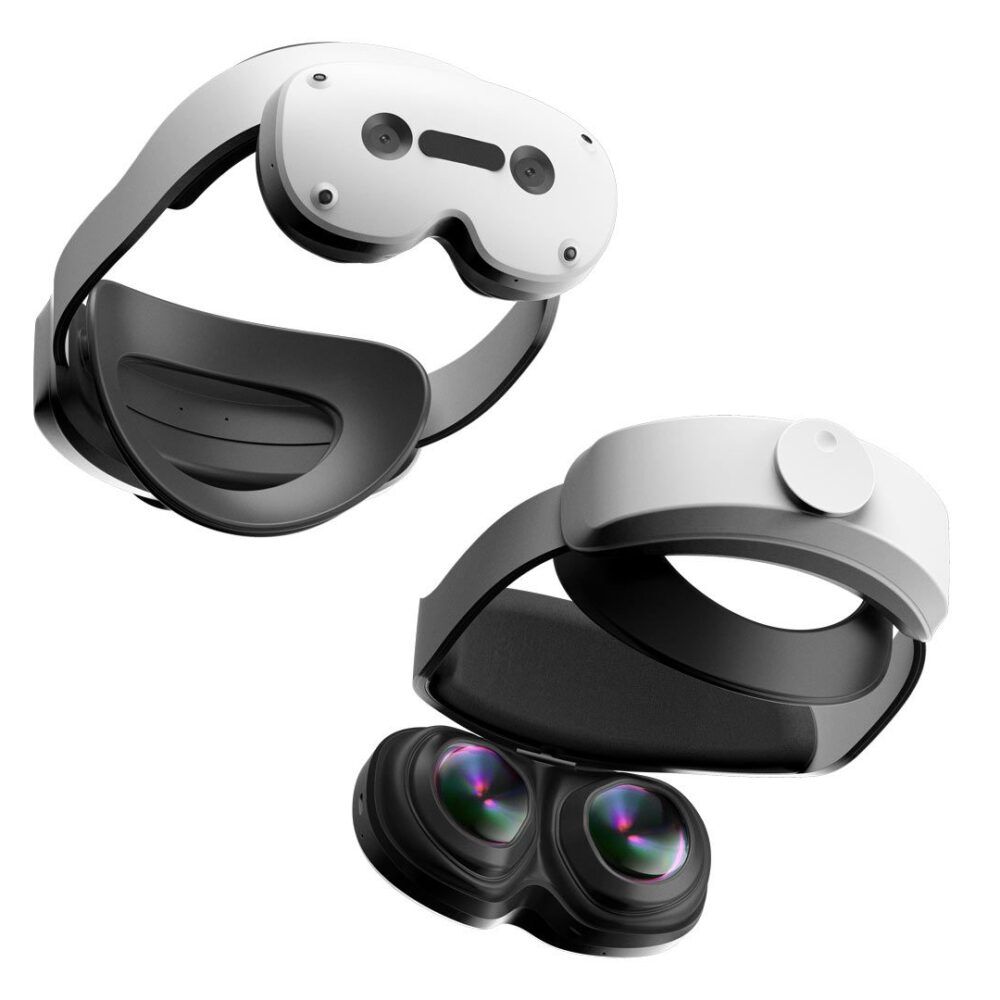
Meta supposedly planned to release the device, codenamed ‘Phoenix’, in the second half of 2026, which is said to include a goggle-like form factor—also slated to offload compute and battery to a puck-like unit tethered to the headset.

Now, according to internal memos obtained by Business Insider, the release timeline of Phoenix has been pushed back to the first half of 2027.

Maher Saba, VP of Reality Labs Foundation, announced the change in an internal memo released December 4th, further noting that the decision arose from a meeting with Reality Labs leaders and CEO Mark Zuckerberg.

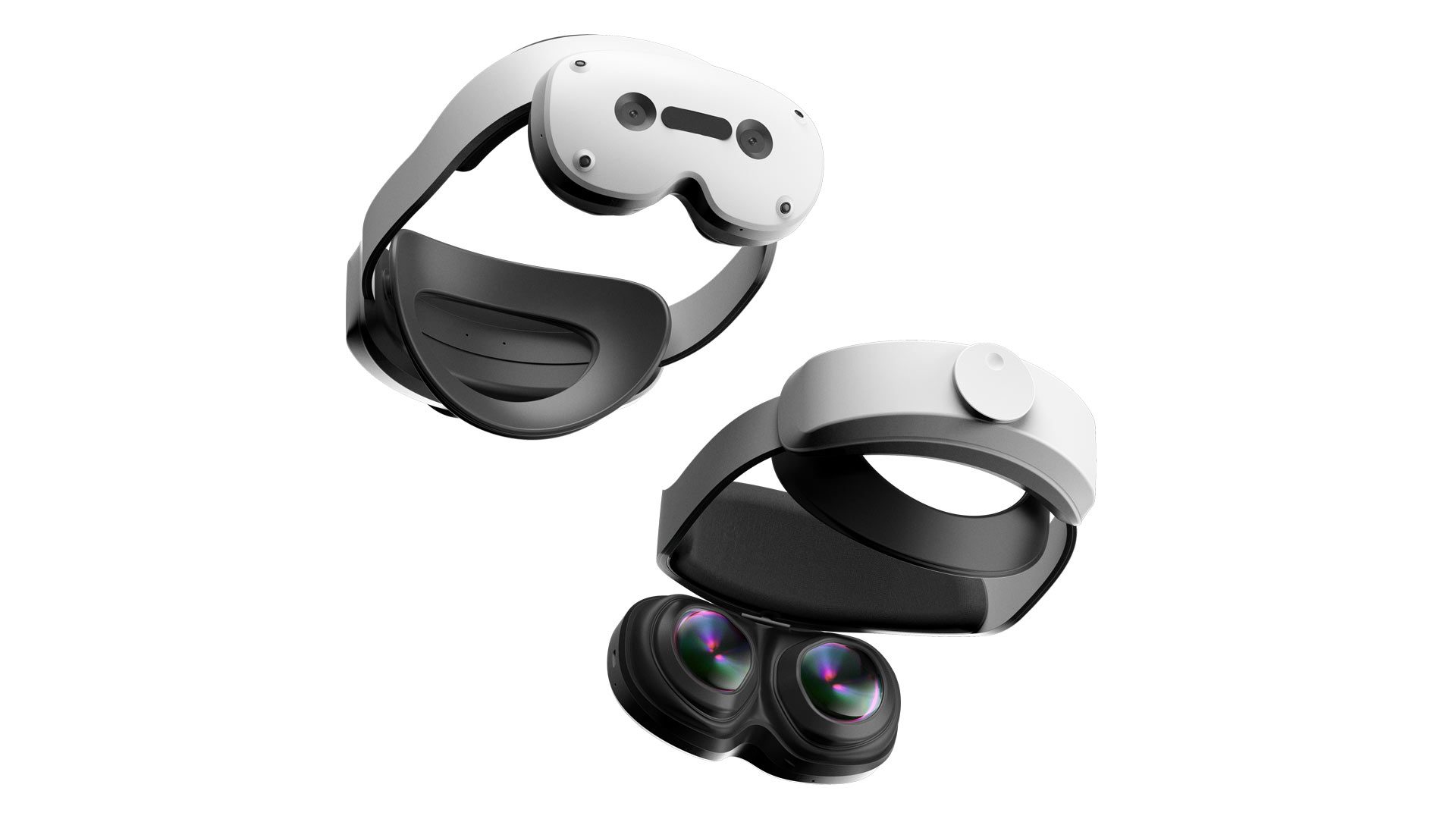
Successive XR prototypes | Image courtesy Meta

Saba maintained that the project should be “focused on making the business sustainable and taking extra time to deliver our experiences with higher quality.”

“Based on that, many teams in RL will need to adjust their plans and timelines,” Saba added. “Extending timelines is not an opportunity for us to add more features or take on additional work.”

A separate memo from metaverse leaders Gabriel Aul and Ryan Cairns added that the release date was pushed back in order to “give us a lot more breathing room to get the details right.”

Continuing: “There’s a lot coming in hot with tight bring-up schedules and big changes to our core UX, and we won’t compromise on landing a fully polished and reliable experience,” the memo said.

Additionally, Aul and Cairns’ memo maintained the company is currently working on its next-gen Quest, which is said to focus on immersive gaming. It’s also said to represent a “large upgrade” in capabilities from current devices, and will “significantly improve unit economics.”

Meta is reportedly also planning to release what Business Insider maintains will be a new “limited edition” XR device in 2026, codenamed ‘Malibu 2’. It’s uncertain what sort of device Malibu 2 is at this time.

My Take

It’s difficult to say what the next Quest will shape up to be. Meta tends to run competing prototypes to see what fits best in the market, and may have a different strategy than anyone expects.

Here’s my current hunch: Quest 3S represents the company’s best chance to reach the low end of the market at $300 (cheaper on sale), and it may be in that position for at least another year. I don’t expect a cheap and cheerful headset from Meta for a while, even with the claim that the next Quest will “significantly improve unit economics.” Relative to what? Quest 3S? A potential Quest Pro 2? We simply don’t know.

Meta’s next real headset (not the limited edition thing) may likely be a high-end headset—think around $800 or $1,000 range—which ought to keep some hardcore Quest platform adherents on the upgrade pathway while possibly offering competition some new(ish) faces: namely Samsung Galaxy XR, Valve’s Steam Frame, and the current Apple Vision Pro M5 refresh. Okay, that’s less of a hunch, and more of a consensus from what everyone’s heard.

What is marginally more certain though is Meta doesn’t seem to be in the manufacturing stage just yet of anything, at least not according to the most recent supply chain leaks, or lack thereof, so I’d expect for a lot more hubbub midway through next year. Whatever the case, I’ve got my eye out for all of the above.

Filed Under: Meta Quest 3 News & Reviews, News, VR Development, vr industry, XR Industry News

Mojo Vision Secures $75M Investment to Commercialize Micro-LED Displays for XR Glasses

September 9, 2025 From roadtovr

Mojo Vision announced it’s secured a $75 million Series B Prime investment round, which the company says will support the commercialization of its powerful and flexible micro-LED platform for XR glasses.

The round was led by Vanedge Capital, and included investments from current shareholders Edge Venture Capital, New Enterprise Associates (NEA), Fusion Fund, Knollwood Capital, Dolby Family Ventures, and Khosla Ventures, and new shareholders, including imec.xpand, Keymaker, Ohio Innovation Fund, and Hyperlink Ventures.

This brings the company’s overall funding to $345 million, according to Crunch Base data; Mojo Vision’s penultimate round came in late 2023, amounting to $43.5 million.

While previously geared towards producing smart contact lenses, Mojo Vision is now all about the underlying micro-LED technology that initially generated headlines back in 2022.

Image courtesy Mojo Vision

At the time, it was expected Mojo Vision would commercialize a contact lens with embedded micro-LED display, however in April 2023 the company announced it was pivoting.

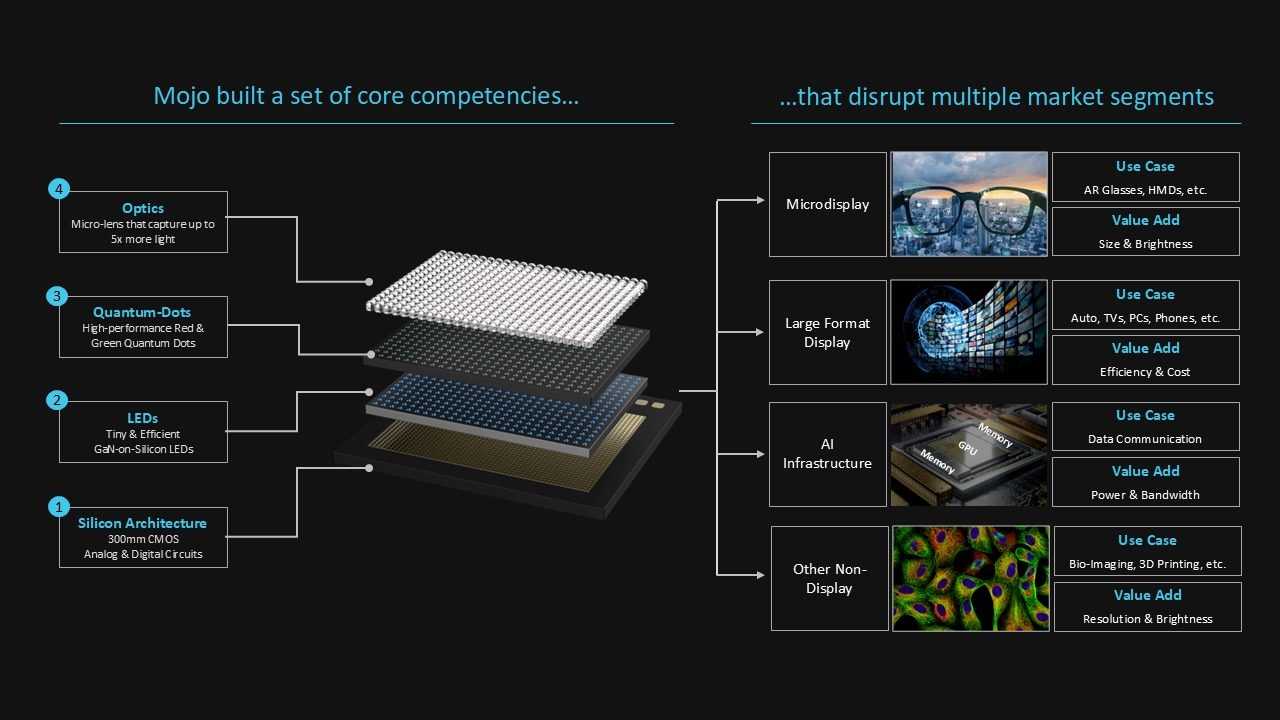
Founded in 2015, Mojo Vision is now building a type of micro-LED technology that allows the mass-production of them onto silicon chips, combining advanced components like gallium nitride (GaN) on silicon emitters, quantum dots, and micro-lens arrays. According to Mojo Vision, this makes the displays very bright, very small, and energy-efficient.

“Through our micro-LED technology development, Mojo has made significant advancements in establishing breakthrough performance standards while laying the foundation for micro-LEDs as a platform for AI innovation in large market segments,” said Nikhil Balram, CEO of Mojo Vision. “This oversubscribed funding round and strong industry support mark a new phase in the design and production of our next-generation micro-LED platform. The company is on an accelerated path to commercialize micro-LED applications that can power AI.”

The company says it’s targeting the micro-LED platform to build displays for XR glasses, but also large format displays and optical interconnects for AI infrastructure.

Filed Under: AR Development, ar industry, AR Investment, Investment, News, VR Development, vr industry, VR Investment, XR Industry News

Operator XR Secures $3.7M VR Training Contract with Texas Department of Public Safety

August 7, 2025 From roadtovr

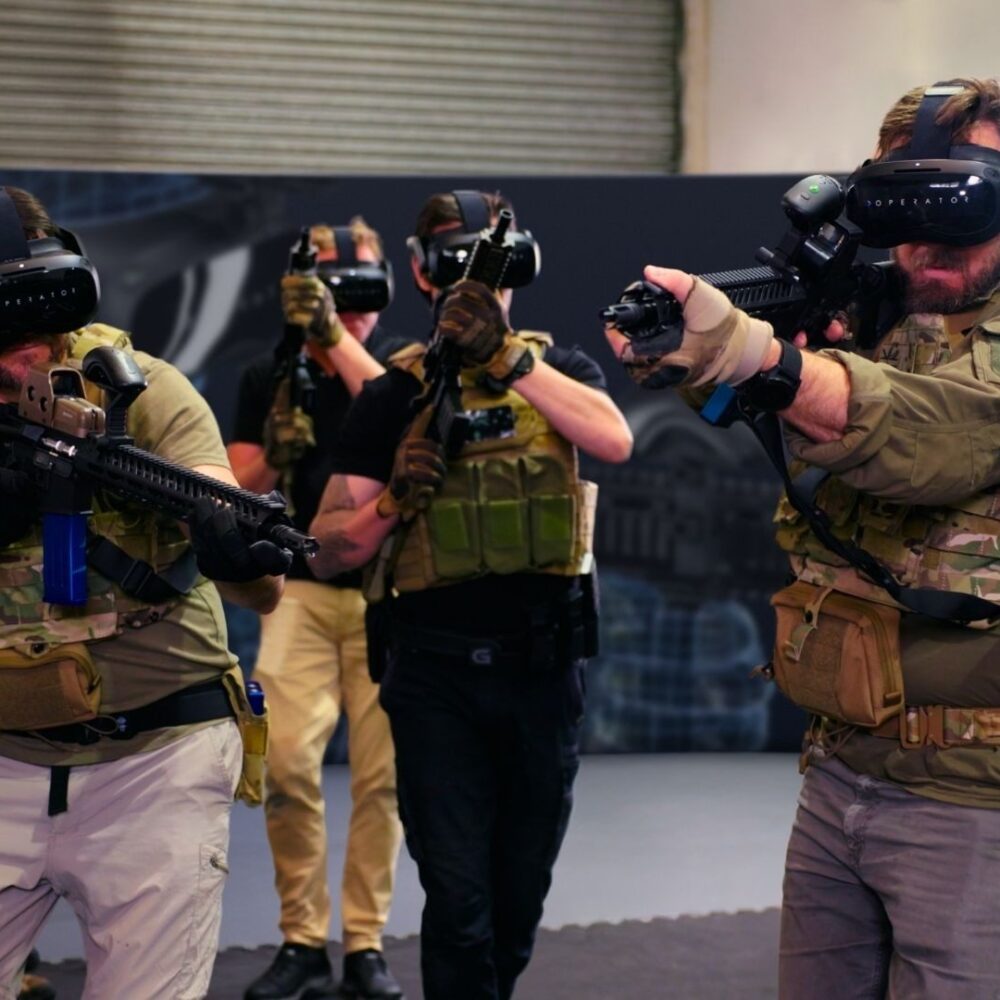
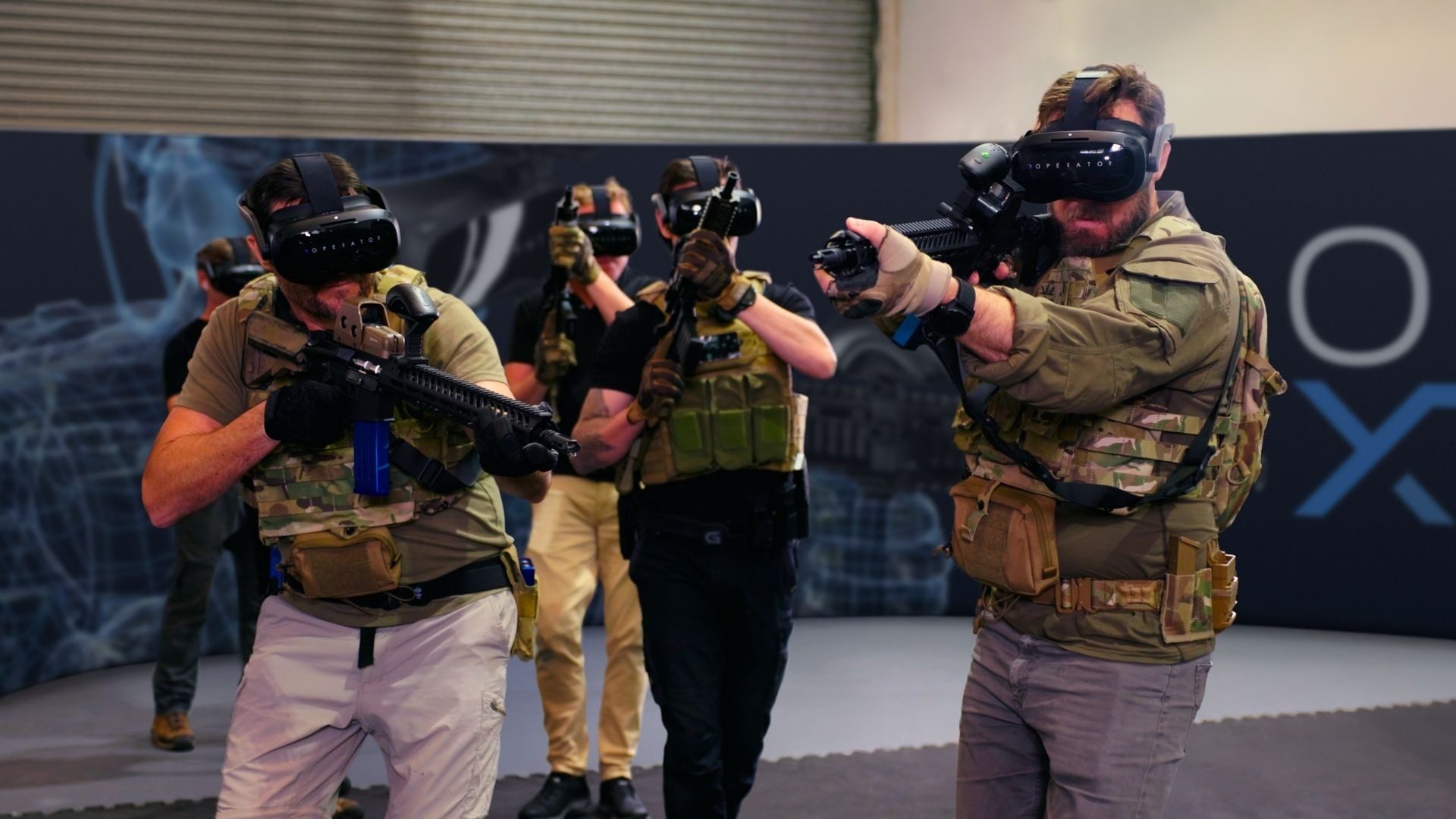
Australian immersive training technology company xReality Group announced its subsidiary Operator XR has secured a contract with the Texas Department of Public Safety (Texas DPS) worth up to AUD $5.71 million (~$3.7 million USD), which will see the rollout of it VR police training system across the state.

According to a press statement, Operator XR’s OP-2 system enables immersive, scenario-based training designed to improve tactical decision-making, de-escalation techniques, multi-officer coordination, and mission planning.

Texas DPS, one of the largest law enforcement agencies in the U.S. serving 30 million residents, is slated to use the system to enhance officer readiness and safety through more frequent and realistic training experiences.

xReality Group CEO Wayne Jones described the deal as a “strategic milestone,” citing Texas DPS’s high profile as a key reference point for further expansion into other state agencies. “This partnership reinforces our U.S. growth strategy and validates the OP-2 platform for large-scale deployment,” Jones said.

The initial portion of the deal, worth AUD $4.3 million ($2.8 million USD), is said to cover delivery of OP-2 hardware and software, along with onboarding and two years of technical support—slated to start in Q2 2026.

The contract includes optional support services for an additional three years, bringing the potential total value to AUD $5.71 million (~$3.7 million USD).

This follows a recent $2.1 million AUD (~$1.4 million USD) ‘Industry Growth Program’ grant by the Australian Government last month to accelerate the AI development roadmap for its Operator XR tactical training platform.

The funding is earmarked to support enhancements such as real-time feedback, automated scenario generation, expanded manufacturing, and global certification over the next 24 months.

Filed Under: News, vr industry, VR Investment, XR Industry News

  • Home