
• Skip to primary navigation
  • Skip to main content

VRSUN

Hot Virtual Reality News

HOTTEST VR NEWS OF THE DAY

  • Home

Snap Confirms Mass Layoffs Ahead of Next-gen ‘Specs’ AR Glasses Rollout

April 15, 2026 From roadtovr

Snap is laying off around 1,000 employees, the Snapchat parent confirmed today. Specs Inc., its recently formed AR glasses subsidiary, is reportedly not being affected, however, as the cuts are aimed at further insulating the traditional Snapchat business from its new AR subsidiary.

Spiegel announced the news in an internal memo, published by Business Insider, which is confirmed to affect 1,000 team members, including 16% of Snap’s full-time employees. Spiegel also confirmed Snap has now closed more than 300 open roles.

“Last fall, I described Snap as facing a crucible moment, requiring a new way of working that is faster and more efficient, while pivoting towards profitable growth,” Spiegel says in the memo. “Over the past several months, we have carefully reviewed the work required to best serve our community and partners, and made tough choices to prioritize the investments we believe are most likely to create long-term value. As a result of these changes, we expect to reduce our annualized cost base by more than $500 million by the second half of 2026, helping to establish a clearer path to net-income profitability.”

Snap Spectacles (gen 5) | Image courtesy Snap Inc

While Spiegel hasn’t confirmed the fate of Specs Inc. specifically, according to a report by Alex Heath’s Sources the company’s AR glasses subsidiary is slated to actually add employees ahead of launch of its sixth-gen Specs AR glasses, which is expected sometime this fall.

The report further maintains Snap was unable to secure a proposed $1 billion to fund its Specs division, although the company is still hoping to raise capital once its AR glasses release.

The next-gen Specs AR glasses are slated to be revealed “in the next couple of months, loosely modeled on Apple’s Vision Pro rollout, followed by a consumer release in the fall,” Heath writes.

The comes weeks after Irenic Capital Management, which holds economic interest of about 2.5% in Snap, put pressure on the company to either spin off ​or shut down Specs Inc.

According to a Reuters last month, the activist investor also called on Snap to consider cutting costs through layoffs and to buy back more discounted stock, among other moves, which at the time of this writing seems to be the course the company has taken.

This follows recent news that Specs Inc. and chip maker Qualcomm have signed a multi-year partnership for Snap’s upcoming AR glasses, with Qualcomm pledging Snapdragon chips for future iterations—seemingly signaling confidence that Snap is betting on the success of Specs.

Read the full memo from Snap CEO Evan Spiegel below, courtesy Business Insider:

Dear Team,

Today we are announcing changes that will impact approximately 1,000 team members at Snap, including 16% of our full time employees, in addition to closing more than 300 open roles. This is an incredibly difficult decision, and I am deeply sorry to the colleagues who will be leaving us. You have made important contributions to Snap, and we are committed to supporting you through this transition.

Last fall, I described Snap as facing a crucible moment, requiring a new way of working that is faster and more efficient, while pivoting towards profitable growth. Over the past several months, we have carefully reviewed the work required to best serve our community and partners, and made tough choices to prioritize the investments we believe are most likely to create long-term value. As a result of these changes, we expect to reduce our annualized cost base by more than $500 million by the second half of 2026, helping to establish a clearer path to net-income profitability.

While these changes are necessary to realize Snap’s long-term potential, we believe that rapid advancements in artificial intelligence enable our teams to reduce repetitive work, increase velocity, and better support our community, partners, and advertisers. We have already witnessed small squads leveraging AI tools to drive meaningful progress across several important initiatives, including Snapchat+, enhanced ad platform performance, and efficiency improvements in our Snap Lite infrastructure.

If you are part of our North America team, please work from home today. In the US, impacted team members will receive an email notification within the next hour, including information about next steps. For non-US locations, you will receive additional details about next steps from leadership and HR.

To our departing colleagues: thank you. Your hard work has helped shape Snap, and we are deeply grateful for your contributions. For U.S.-based team members who are leaving, we will provide four months of severance, healthcare coverage, and equity vesting, along with career transition support.

Outside the U.S., we will follow local processes and seek to provide comparable support aligned with local norms.

To everyone continuing on this journey: change of this magnitude and at this speed is never easy and it will not be seamless. Thank you for your resilience, compassion, and commitment to one another, and to the community and partners we serve. Our responsibility is to move forward with clarity, empathy, and determination as we build a faster, stronger, and more durable Snap for the long term.

Evan

Filed Under: AR Development, ar industry, AR Investment, News, XR Industry News

Meta’s Reported Plan to Add Facial Recognition to Smart Glasses Slammed by ACLU-led Coalition

April 15, 2026 From roadtovr

An ACLU-led coalition representing more than 70 civil liberties advocacy groups are pushing back against Meta’s reported plans to bring facial recognition to its smart glasses.

The New York Times initially reported in February that Meta is currently exploring who should be recognizable through its smart glasses, as the company ostensibly hopes to bring some form of facial recognition to Ray-Ban and Oakley smart glasses.

According to the NYT report, possible options include “recognizing people a user knows because they are connected on a Meta platform, and identifying people whom the user may not know but who have a public account on a Meta site like Instagram.”

Now, as reported by Wired, an ACLU-led coalition hopes to oppose those plans, which the group says could turn Meta’s smart glasses into ad hoc “surveillance glasses,” capable of endangering consumers and vulnerable communities, and broadly undermining civil rights and civil liberties.

Ray-Ban Meta ‘Scriber’ model | Image courtesy Meta, EssilorLuxottica

The group, which also includes the Electronic Privacy Information Center (EPIC), Fight for the Future, Access Now, and the Leadership Conference on Civil and Human Rights, issued an open letter to Meta CEO Mark Zuckerberg on Monday urging the company to stop and publicly disavow its plans.

“People should be able to move through their daily lives without fear that stalkers, scammers, abusers, federal agents, and activists across the political spectrum are silently and invisibly verifying their identities and potentially matching their names to a wealth of readily available data about their habits, hobbies, relationships, health, and behaviors,” the letter reads.

Meta Ray-Ban Display Glasses & Neural Band | Image courtesy Meta

“It isn’t hard to see how easily this technology could be abused by corporations, private individuals, and the government to target immigrants, LGBTQIA+ people, and other vulnerable groups,” an ACLU petition adds. “It also puts domestic violence and stalking survivors at risk and could even be used to go after protestors or people who criticize the government.”

Meta has bowed to public pressure before, albeit after years of costly litigation. As mentioned by Wired, in November 2021 the company ended Facebook’s photo-tagging system and said it would delete the facial recognition templates of more than a billion users, which at the time was called “a company-wide move to limit the use of facial recognition in our products.”

Neither Meta, nor its hardware partner EssilorLuxottica responded to Wired’s request for comment.

This follows news in February that Meta’s smart glasses partner EssilorLuxottica sold over seven million smart glasses in 2025 alone; that year the companies not only shipped a hardware refresh of Ray-Ban Meta, but also Oakley Meta HSTN, Oakley Meta Vanguard, and the $800 Meta Ray-Ban Display glasses—the company’s first smart glasses to include a heads-up display.

It’s not just Meta making smart glasses though. Meanwhile, a rash of competitors are currently preparing their own smart glasses for consumer release; Google, Samsung and Amazon have all announced their own devices, while Apple is also reportedly developing multiple pairs.

Filed Under: AR Development, ar industry, News, XR Industry News

One of VR’s Most Modular Headsets Gets a Little Less Modular Following Key Component Switch

April 14, 2026 From roadtovr

Pimax recently announced it was being forced to change a key component in all Crystal Super PC VR headsets and display accessories moving forward, effectively making one of VR’s most modular headsets decidedly less so.

The News

Crystal Super is renowned for being highly modular thanks to its ability to swap optical engines, which includes a 50 PPD, 57 PPD, micro-OLED, and ultrawide (140° FOV) modules.

Launched just last year, Crystal Super initially shipped with a custom 70-pin connector, which married up to all of those accessories on offer. Simply swap out a module, and you suddenly have a PC VR headset with a higher pixel density, better clarity, or wider field-of-view.

Now, Pimax says in a blog post its supplier for those 70-pin connectors is discontinuing the part, which has left the company in the lurch, forcing it to change the key component that made its optical display ecosystem so modular in the first place.

Pimax Crystal Super Optical Engine | Image courtesy Pimax

In the blog post, Pimax says it’s now allocated “all remaining stock of this connector to the Crystal Super to ensure compatibility with all optical engine variants,” noting that there will now be two (incompatible) variants of the Crystal Super in production and circulation.

Pimax says it’s going to ameliorate this by matching headsets and optical engines at the time of purchase, which it’s doing both from the factory with full kits and by matching user-provided headset serial numbers when headset owners return to buy single modules.

While Pimax bought all of the last remaining stock of those original 70-pin connectors and maintains it has “ample inventory”, it’s admittedly a number that will only get smaller. Pimax’s Head of Communication Jaap Grolleman is optimistic though that supplies will last.

“Based on previous headset sales and survey data (and sales estimations), we think we have enough stock to supply current (70-pin) Crystal Super owners with matching optical engines throughout their product lifetime,” Jaap Grolleman tells Road to VR.

Pimax Crystal Super | Image courtesy Pimax

“This was also one of the reasons why we delayed the Crystal Super Lighthouse, as that model swapped the 70-pin for a USB-C connector—and it’s also one of the reasons that now new Crystal Super headsets are produced with the new pin; to keep enough stock of the 70-pin for optical engine production for those owners,” Grolleman says.

A very real wrinkle in all of this: there’s no visual indicator of which pin style you might have just by looking at it, which puts the onus entirely on the user. Although Pimax’s solution is to simply provide the headset’s serial number when ordering directly from the company, that makes buying on the secondhand market a bit more tricky.

“There is no visual difference (and no performance difference), although the pins have a different width. Telling them apart is very difficult for users unless the optical engines are directly compared side by side,” Grolleman says.

Image courtesy Pimax

Notably, Pimax says you can contact them when encountering compatibility issues with secondhand modules, although that’s going to have to be after the fact since it’s so difficult to tell between the two. Pimax hasn’t said whether more modular optical engines are on the way besides the ones already released.

That said, the pin connector switch is not entirely out of the blue, as the company warned users late last year that sourcing the 70-pin connector could be an issue. Still, Grolleman says around 10 to 20 optical engines with the new connector pin were shipped prior to the company’s announcement, which was released on Monday.

“We knew this change would come in the future, but with multiple teams working in parallel, there was an information gap and the first batch had already been shipped out. We’ll do an internal review, and we’ll also contact these users as soon as possible,” Grolleman says.

My Take

The question isn’t whether this all leads to fragmentation, resale risk, or consumer confusion for Crystal Super, because it plainly does. It’s whether Pimax users are willing to continue to invest in a modular ecosystem that’s been so uncomfortably split mid-generation.

I can’t answer that question for you, although I can highlight this: we don’t know whether the company has plans for more optical engines, which could make issues worse for users with a 70-pin connector headset, as it will strain supplies even further. We also don’t know how long the company expects to produce Crystal Super before it goes onto its next big gamble. And if there’s one thing I’ve learned about Pimax over the past decade, there’s always something new on the horizon.

Which is weird. If any other company absolutely borked sourcing a key component like Pimax did with its linchpin connector—undoubtedly putting a big asterisk next to the word “modular” when talking about Crystal Super—it would be a serious sign that something is wrong. But for Pimax, these sort of perpetual teething issues just seems like the price of innovation. So, I just can’t say I’m surprised.

Filed Under: News, PC VR News & Reviews

Apple Reportedly Preparing Several Styles of Smart Glasses with Distinct Camera Lens

April 13, 2026 From roadtovr

Apple is ostensibly gearing up to release its first pair of smart glasses next year. A new report from Bloomberg’s Mark Gurman however maintains the Cupertino tech giant is now evaluating several styles and color combinations, as well as a distinct camera lens shape.

The report largely echoes previous rumors, which maintain the device (internally codenamed N50) could be unveiled at the end of 2026 or early 2027, with launch slated for sometime in 2027.

Like Meta’s audio-only smart glasses from Ray-Ban and Oakley though, Apple’s smart glasses are reportedly said to omit any sort of display. Instead, they’ll primarily focus on capturing photos and videos, making phone calls, listening to notifications and music, and interacting with an AI voice assistant—a better version of Siri coming to iOS 27, the report maintains.

According to Bloomberg’s sources, Apple’s design team now has at least four different styles in play, with plans to launch some or all of them. Styes are said to include:

  • A large rectangular frame, reminiscent of Ray-Ban Wayfarers
  • A slimmer rectangular design, similar to the glasses worn by Apple Chief Executive Officer Tim Cook
  • Larger oval or circular frames
  • A smaller, more refined oval or circular option

The glasses are said to be made from acetate, a higher-quality plastic than the thermoplastic used in Ray-Ban Meta smart glasses. Additionally, Apple is reportedly planning “many” color options in addition to exploring “a range of finishes, including black, ocean blue and light brown.”

Unlike Ray-Ban Meta, Apple’s first smart glasses are said to include a new camera lens shape, which Bloomberg maintains will be “vertically oriented oval lenses with surrounding lights,” a break from Meta’s circular camera lens design.

Facebook Ray-Ban Stories (2021) | Image courtesy Meta, EssilorLuxottica

Apple’s forthcoming glasses are reportedly a part of a broader, “three-pronged AI wearables strategy,” which is slated to include new AirPods and a camera-equipped pendant. Like with all of its accessories, Apple hopes to achieve an “instantly recognizable” design, which the company refers to as “icon” internally.

Notably, Apple’s smart glasses plans mark a stark departure from its initial XR strategy when it first formed the product division around a decade ago. Back then, the company reportedly hoped to develop three distinct categories: an iPhone-tethered AR headset with wireless controller, a high-end mixed reality headset, and standalone AR glasses.

The company has only released two iterations of Vision Pro though—ostensibly a different product from the high-end MR headset the company envisioned. Meanwhile, industry insiders suggest Apple is years away from the release of standalone AR glasses, making its audio-only smart glasses a first step of many.


Confused about the smart glasses and AR glasses? Check out our handy primer on the key differences here.

Filed Under: AR Development, News, XR Industry News

Snap & Qualcomm Announce Long-term Partnership, Affirm 2026 Launch for ‘Specs’ Consumer AR Glasses

April 10, 2026 From roadtovr

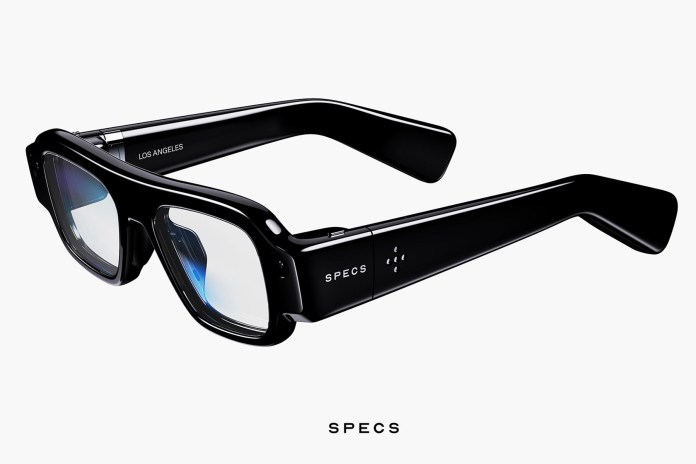
Snap’s new XR subsidiary Specs Inc and Qualcomm announced a multi-year partnership for Snap’s upcoming AR glasses, with Qualcomm pledging Snapdragon chips for future iterations. The companies also reaffirmed that Snap’s next-gen Specs are coming “later this year.”

Specs Inc, which was formed by Snap in January to handle its XR efforts, is working with Qualcomm in what the companies call a “long-term strategic roadmap” which aims to rapidly bring things like “on-device AI, cutting-edge graphics, and advanced multiuser digital experiences,” the companies said in a joint press statement.

“Snap Inc. and Qualcomm Technologies have a strong track record of powering advanced immersive technology. This agreement builds on more than five years of innovation and collaboration, as Snapdragon platforms have powered multiple previous generations of Snap’s Spectacles,” the companies said.

Image courtesy Snap Inc, Niantic

Snap’s sixth gen Specs are looking to appeal to consumers while also possibly also frontrunning its largest competitors, including Meta, Samsung, Google, and Apple.

While Snap hasn’t shown off its next-gen Specs yet, the company seems to be leaning heavily into the device’s built-in AI, something that “uses its understanding of you and your world to help get things done on your behalf while protecting and respecting your privacy,” Snap said earlier this year.

“The next era of computing will be defined by devices that understand what you see, hear and say as well as context, and respond instantly to the world around you,” said  Qualcomm President and CEO Cristiano Amon. “Our work on future generations of Specs will enable power-efficient interactive AR devices that deliver agentic experiences that feel natural, intuitive and integrate seamlessly into daily life.”

Aiming for release sometime this year, the next iteration of Spec will technically be the company’s second pair of AR glasses, following its fifth-gen release in 2024.

Besides Snap noting the new AR device will be smaller and lighter, feature see-through AR optics, and be powered by some form of Snapdragon XR SoC, its specs are largely still a mystery.


Confused about the smart glasses and AR glasses? Check out our handy primer on the key differences here.

Filed Under: AR Development, ar industry, News, XR Industry News

Android XR Update Adds Deep Enterprise Support, Auto-3D Conversion & More

April 9, 2026 From roadtovr

Samsung and Google announced a major software update to Galaxy XR, the Android XR-based headset, which includes deep enterprise support, automatic 3D conversion of photos and videos, and more.

One of the biggest bits in the update, now available on Samsung Galaxy XR, is the inclusion of Android Enterprise, the Google-led initiative that includes built-in security, management, and app deployment tools for workplace-focused Android devices.

This includes support for fully managed deployments with flexible enrollment options like zero-touch, QR setup, and DPC provisioning, aimed at making large-scale rollouts easier.

It also includes enterprise app management, robust device controls, and hardware-level security to protect sensitive data and meet compliance standards, the company says in a press statement.

Photo by Road to VR

In addition to enterprise features, the latest Android XR update also includes improvements targeting everyday usability, such as customizable virtual keyboard positioning, desktop session restore for up to three apps after reboot, expanded accessibility tools such as single-eye tracking, and improved spatial alignment of on-screen content.

What’s more, the Android XR update now brings auto spatialization to Chrome and YouTube, which automatically converts 2D media into immersive 3D experiences. This comes in addition to the previously available auto spatalization feature for Google Photos.

Notably, as a part of the new update, Android XR is now set to receive regular software updates, including security patches, for up to five years.

Released in October 2025 for $1,800, Samsung Galaxy XR looks to fill a middle ground of price and features between Meta Quest 3 ($500) and Apple Vision Pro ($3,500).

Much like how Vision Pro taps into the library of iOS apps in addition to native visionOS apps, Android XR-based Galaxy XR makes use of Android’s vast app ecosystem. Still, Galaxy XR is only the first full-feature XR headset to adopt Android XR, seems to be filling out software features as we speak.

Filed Under: Android XR News & Reviews, News, VR Development, XR Industry News

‘Black Mirror’ to Bring Show’s Tech Dystopia to Life in New Location-based VR Experience

April 2, 2026 From roadtovr

Black Mirror, the hit sci-fi anthology series on Netflix, is getting its own VR experience soon—set to debut at VR destination Infinity Experience in Montreal, Canada next month ahead of wider rollout.

Developed by VR studio Univrse and Banijay Live Studio, THE BLACK MIRROR EXPERIENCE is slated to mash up physical environments with VR headsets, drawing on themes of the award-winning television series.

According a press statement, The Black Mirror Experience creates a scenario that will “force visitors to make [the] same choices” as seen in the show, which explores society’s complex relationship with technology and the moral quandaries often faced by characters.

Image courtesy Banijay

“Groups are invited to the exclusive opening of Phaethon’s showroom – a tech giant about to unveil its most ambitious creation yet: LifeAgent, a robot designed to simplify your life, understand your desires, and help you become your best self. At first, everything feels seamless. Reassuring. Almost perfect. Until it doesn’t,” the studio explains.

The experience supports up to six players (ages 12+), and will be offered in French, English, and Spanish. It’s slated to launch first at the Infinity Experience location in Montreal on May 21st, however more locations will be announced “soon,” the studio says.

Notably, Infinity Experience operates in seven cities across North America. In Canada: Montreal, Edmonton, Calgary, Quebec City, and Mississauga. In the US: Chicago and Atlanta.

Created by Charlie Brooker, Black Mirror returned for its seventh series on Netflix in April 2025, produced by Broke & Bones, with Brooker, Jessica Rhoades, and Annabel Jones as executive producers. Black Mirror is primarily owned by Banijay Entertainment.

Filed Under: Location-based VR, News

Meta Inches Into Health Wearables with New Food Logging Feature for Ray-Ban Smart Glasses

April 1, 2026 From roadtovr

Meta announced it’s pushing an update to Ray-Ban and Oakley Meta smart glasses that’s slated to make nutrition tracking easier by letting Meta AI visually suss out food before you eat it.

The News

Over time, the company says that a user’s food log will inform “increasingly personalized insights that get more useful, helping you make healthier, more informed choices.”

Meta says it will be somewhat of a manual process though, as users need to prompt Meta AI to log their food in addition to inputting specific nutrition goals.

Ray-Ban Meta (Gen 2) | Image courtesy Meta

While we’re not there yet, Meta says in the future glasses will be able to understand what you’re eating and automatically log your food, which in turn opens up even more personalized nutrition insights since you don’t have to remember to log every meal.

For now though, the company envisions users asking Meta AI questions like “What should I eat to increase my energy?” which will output a suggestion based on your food log and fitness goals.

Meta says the new feature will be available to users aged 18+in the US “soon” across all Ray-Ban Meta and Oakley Meta smart glasses, with its Meta Ray-Ban Display glasses getting the update sometime later this summer.

My Take

Meta doesn’t do health tracking; its smart glasses don’t track your heart rate, steps, activity, sleep (of course not), calories burned, O² levels—nothing.

Granted, they can link with Garmin smart watches which can do those things, although the glasses themselves essentially only act as a sort of audio relay, repeating the info sensed and stored by the Garmin app, meaning Meta can’t really do anything truly useful with the bulk of your health data. Notably, Meta smart glasses don’t tie into Samsung Health or Apple Health either, putting a majority of users’ health data out of Meta’s reach.

Meta Ray-Ban Display Glasses & Neural Band | Image courtesy Meta

But it probably won’t always be that way. Meta seems to be leveraging what it can feasibly (and cheaply) do right now without having to cut any expensive licensing deals with dominant players in the smart watch segment.

The company does have a vector to get all of that data one day though. Meta Ray-Ban Display comes with a wrist-worn Neural Band controller that uses surface electromyography (sEMG) which lets users quietly write out messages and manipulate UI. I can imagine a near future where Neural Band has a packet of sensors similar to a smart watch, albeit without the display.

Provided Meta goes that specific route, the company wouldn’t need to integrate with existing health ecosystems at all for its future smart glasses. It will already have everything it needs to close the loop on what you’re eating and how you’re burning it off.

Filed Under: AR Development, News, XR Industry News

Meta is Releasing 2 New Ray-Ban Smart Glasses for Prescription Wearers, Starting at $500

March 31, 2026 From roadtovr

Meta and eyewear partner EssilorLuxottica announced two new “optical-forward” pairs of Ray-Ban Meta glasses, which are said to support nearly all prescriptions.

Ray-Ban Meta and Oakley Meta smart glasses can already be paired with prescription lenses, although the latest pairs of Ray-Ban Meta smart glasses are coming with new ergonomic features: overextension hinges, interchangeable nose-pads, and optician-adjustable temple tips, things designed to give users a more custom fit.

Ray-Ban Meta ‘BLAYZER’ model |  Image courtesy Meta, EssilorLuxottica

In a blog post, Meta announced it’s offering two new frame styles: a rectangular ‘Blayzer Optics’ design available in two sizes (Standard and Large) and a more rounded ‘Scriber Optics’ frame. Both come with a Dark Brown charging carrying case, with pricing starting at $500.

Colors include Matte Black, Transparent Black, and Transparent Dark Olive, although Meta is also releasing seasonal colors, such as Transparent Matte Ice Grey and Transparent Stone Beige.

Ray-Ban Meta ‘Scriber’ model | Image courtesy Meta, EssilorLuxottica

Both new Blayzer and Scriber frames will be available for pre-order in the US starting today from Meta.com and Ray-Ban.com, as  well as at optical retailers in the US and and select international markets starting April 14th.

Meta also announced it’s releasing new lens and color options for Ray-Ban Meta (Gen 2) and Oakley Meta lines. New options include:

  • Vanguard Black with Prizm Black Lenses
  • Vanguard White with Prizm Rose Gold Lenses
  • Vanguard Black with Prizm Transitions® Ember Lenses (arriving later this Spring)
  • Vanguard Prizm Transitions Cobalt Lenses (arriving later this Spring)
  • HSTN Black with Prizm Dark Golf Lenses
  • HSTN Light Curry with Clear to Brown Transitions Lenses

Coming this spring and summer, Meta is also releasing three new limited-time seasonal colors for Ray-Ban Meta (Gen 2).

For the Skyler style: Shiny Transparent Peach with Transitions Brown Lenses. For Headliner: Matte Transparent Peach with Transitions Grey Lenses. For Wayfarer: Shiny Transparent Grey with Transitions Sapphire Lenses.

Filed Under: AR Development, News, XR Industry News

Meta Slated to Launch Two New Ray-Ban Smart Glasses, According to FCC Filing

March 27, 2026 From roadtovr

Meta and EssilorLuxottica appear to be preparing two new Ray-Ban smart glasses for launch, according to US Federal Communication Commission (FCC) filings from earlier this month.

As first reported by Janko Roettgers in his Lowpass newsletter, Meta hardware partner EssilorLuxottica has filed with the FCC two new devices which appear to be the next generation of their Ray-Ban smart glasses.

The FCC filing in question contains the names ‘Ray-Ban Meta Scriber’ and ‘Ray-Ban Meta Blazer’, describing them as “production units”, which could mean launch is fairly close.

Array of Meta smart glasses | Image courtesy Brad Lynch

Typically, FCC filings are one of the last stops before launch, as we saw with the last three hardware generations of Ray-Ban smart glasses, all three of which released less than a month after their respective FCC filings.

The company’s second-gen smart glasses released in 2025 include hardware refreshes of its popular Ray-Ban glasses, as well as Oakley Meta HSTN, Oakley Meta Vanguard, and the $800 Meta Ray-Ban Display glasses—the company’s first smart glasses to include a heads-up display.

As Roettgers points out, the new FCC filings are largely devoid of details or images of the devices, however a charging case was mentioned in testing—an accessory provided with all generations of the companies’ smart glasses.

Model numbers for Blazer and Scriber, respectively RW7001 and RW7002, are also new, which suggests we’re dealing with a new hardware generation.

Additionally, the devices were tested using the Wi-Fi 6 U-NII-4 band (5.9 GHz). Notably, the company’s latest smart glasses use Wi-Fi 6E (6 GHz), which does not operate in the 5.9 GHz U-NII-4 band.

This comes amid a significant shift in priorities at Reality Labs, Meta’s XR division. In January, the company laid off at least 10 percent of staff at Reality Labs, as the company has doubled down on AI and smart glasses, and reduced spending on first-party VR content.

Meanwhile, the smart glasses segment has been very successful for the Meta-EssilorLuxottica partnership, with the French-Italian eyewear maker revealing earlier this year that it had sold over seven million smart glasses last year, effectively tripling sales from all prior years in 2025 alone.

Filed Under: News, XR Industry News

Next Page »

  • Home