• Skip to primary navigation
  • Skip to main content

VRSUN

Hot Virtual Reality News

HOTTEST VR NEWS OF THE DAY

  • Home

Snap Forms ‘Specs Inc’ to Insulate AR Business Ahead of AR Glasses Launch

January 29, 2026 From roadtovr

Snapchat maker Snap announced it’s formed a new business dedicated to its upcoming AR glasses.

The News

Called Specs Inc, the wholly-owned subsidiary within Snap is said to allow for “greater operational focus and alignment” ahead of the public launch of its latest AR glasses coming later this year.

In addition to operating its AR efforts directly under the new brand, Snap says Specs Inc will also allow for “new partnerships and capital flexibility,” including the potential for minority investment.

Snap Spectacles Gen 5 (2024) | Image courtesy Snap Inc

In September, Snap CEO Evan Spiegel noted in an open letter that the company is heading into a make-or-break “crucible moment” in 2026, characterizing Specs as an integral part of the company’s future.

“This moment isn’t just about survival. It’s about proving that a different way of building technology, one that deepens friendships and inspires creativity, can succeed in a world that often rewards the opposite,” Spiegel said.

While the company hasn’t shown of its next-gen Specs yet, the company touts the device’s built-in AI, something that “uses its understanding of you and your world to help get things done on your behalf while protecting and respecting your privacy.”

Snap further notes that it’s “building a computer that we hope you’ll use less, because it does more for you.”

My Take

Snap (or rather, Specs) is set to release its sixth-gen Spectacles this year, although this is the first pair of AR glasses the company is ostensibly hoping to pitch directly to the public, and not just developers and educational institutions.

Info is still thin surrounding Spec Inc’s launch plans for the devices, although forming a new legal entity for its AR business right beforehand could mean a few things.

For now, it doesn’t appear Snap is “spinning out” Spectacles proper; Snap hasn’t announced new leadership, leading me to believe that it’s more of a play to not only attract more targeted investment in the AR efforts, but also insulate the company from potential failure.

Snap Spectacles Gen 5 (2024) | Image courtesy Snap Inc, Niantic

It’s all fairly opaque at this point, although the move does allow investors to more clearly choose between supporting the company’s traditional ad business, or investing it the future of AR.

However you slice it though, AR hardware development is capital intensive, and Snap’s pockets aren’t as deep as its direct competitors, including Meta, Apple, Google, and Microsoft.

While Snap confirmed it spent $3 billion over the course of 11 years creating its AR platform, that’s notably less than what Meta typically spends in a single quarter on its XR Reality Labs division.

It’s also risky. The very real flipside is that Specs Inc could go bankrupt. Maybe it’s too early. Maybe it underdelivers in comparison to competitors. Maybe it’s too expensive out of the gate for consumers, and really only appeals to enterprise. Maybe it isn’t too expensive, but the world heads into its sixth once-in-a-generation economic meltdown.

Simply put, there are a lot of ‘maybes’ right now. And given the new legal separation, Snap still has the option to survive relatively unscathed if it goes belly up, and lives to find another existential pivot.

Filed Under: ar industry, AR Investment, News, XR Industry News

Meta CTO: Metaverse Efforts Led to a “lack of focus” on Quest “at expense of user experience”

January 26, 2026 From roadtovr

Meta CTO Andrew Bosworth offered the first bit of insight into the company’s recent Reality Labs shakeup, publicly acknowledging that Meta’s metaverse efforts suffered from a “lack of focus” that ultimately hurt the user experience on Quest.

Speaking at Axios House in Davos, Switzerland alongside the World Economic Forum last week, Bosworth discussed several issues that led Meta to refocus its metaverse and VR strategy—something that also included layoffs affecting 10 percent of its Reality Labs XR team.

Meta is refocusing its approach, and doubling down on AI and smart glasses while narrowing and reorganizing its VR and metaverse efforts. Bosworth, who is also head of Reality Labs, frames the pivot as a three-point problem: poor communication around the metaverse vision, high development costs, and an over-integration of Horizon Worlds with Meta’s VR strategy.

Horizon World teases (2022) | Based on images courtesy Mark Zuckerberg

Horizon Worlds wasn’t the company’s first social VR platform, although it did represent the first real concerted effort to bring to Quest users a ‘default’ shared VR space when it was initially released in 2021. Bosworth notes that Meta’s metaverse ambitions were to build a “rich version” of the mental “transportation” people already experience when socializing through smartphones.

“We still plan on doing that,” Bosworth told Axios’ Ina Fried, referring to Horizon Worlds. “But it’s like any investment. You’re going to look at how you do over the course of years and you’re going to reinvest in some areas and trim your losses in others. For us, we’re seeing tremendous growth of the our metaverse on mobile.”

Image courtesy Meta

While the launch across Android and iOS mobile devices in 2023 pushed Horizon Worlds reach beyond Quest for the first time, it eventually led to higher costs and a more difficult development process.

“Having to build everything twice—once for mobile and once for VR—is a tremendous tax on the team. You’d rather grow a giant audience and then work from a position of strength.”

A second issue was Meta’s decision to tightly bind Horizon Worlds to the Quest platform—something Bosworth admits wasn’t for everyone.

“When you put the headset on, you’re immediately in this kind of co-present accessible space. That is a real challenging piece of work to land from a standpoint of there’s lots of people who put this headset on for lots of different reasons. You want to support all those different use cases, [but] the lack of focus comes at an expense of user experience and a great expense in terms of development cost.”

Bosworth says that while the company now has “two much more focused bets,” those essentially come down to supporting third-party VR content and Horizon Worlds on mobile.

“To do this, of course, it’s tragic anytime your plans change and there’s a human cost; we found a bunch of roles that we just didn’t need anymore,” Bosworth said, referring to layoffs. “So, we did end up downsizing the effort on the metaverse specifically. Though on net, Reality Labs isn’t downsizing. We’re taking basically taking all of those [positions] and taking the investment on wearables, which is growing so rapidly for us.”

This follows the closure of three first-party VR studios, representing a concerted pullback from developing and funding content for the Quest platform.

Notably, Reality Labs’ operating costs have consistently exceeded $4 billion per quarter since late 2021. Q4 is the XR division’s most performant in terms of revenue, however Reality Labs typically only generates a max of around $1 billion, with Q1-Q3 bringing in significantly less. We’re sure to learn more about Q4 2025 when the company reports its after market close on Wednesday, January 28th.

You can watch the full interview below. Thanks go to Reddit user ‘gogodboss’ for pointing us to the news.

Filed Under: News

Lynx-R2 Headset Revealed With Surprisingly Wide Field-of-View in a Tiny Package

January 21, 2026 From roadtovr

Lynx has unveiled the Lynx-R2, a significant upgrade over its original R1 mixed reality standalone which aims to capture the enterprise and prosumers market.

The France-based startup considers R2 is a significant step forward, featuring new aspheric pancake lenses from Hypervision which are said to deliver 126° horizontal field-of-view (FOV)—notably larger than R1’s 90°, or Quest 3’s 110° horizontal FOV.

Paired with dual 2.3K LCD displays delivering more than 24 pixels per degree (PPD) at the center, R2 is said to deliver “crisp text and image rendering for industrial and medical use cases.”

Image courtesy Lynx Mixed Reality

While the new standalone headset features the same flip-up design as its predecessor, R2 is powered by Qualcomm’s Snapdragon XR2 Gen 2, offering substantial gains in GPU and AI performance over R1, which was introduced in 2021 with the older Snapdragon XR2 Gen 1.

Other features including 6DOF head tracking, hand-tracking, controller and ring tracking, plus a full-color four-sensor Sony camera array that also includes depth sensing for advanced computer vision.

Originally planned to ship with Android XR, Lynx-R2 is actually set to launch with Lynx OS following Google’s decision to withdraw support. Lynx OS is however based on Android 14, meaning it can sideload APKs in addition to supporting OpenXR 1.1.

Image courtesy Lynx Mixed Reality

Additionally, Lynx says it will release “all the electronic schematics of the headset motherboard and the mechanical design blueprints,” which is said to allow academics
and hobbyists to freely mod the device.

This will also include raw sensor access so developers can enable their own computer vision applications, as well as full offline functionality for sectors such as defense, healthcare, and industry, Lynx says.

“With the R1, we proved that a small, independent team could build a world-class mixed reality device,” said Stan Larroque, founder and CEO of Lynx Mixed Reality. “With the R2, we are proving that an open ecosystem is not just a philosophy, but provides a superior way to approach these devices. We have listened to 3rd party developers and enterprise users. They didn’t just want more pixels; they wanted a wider field of view, faster processing, and total ownership of their sensors. The R2 delivers just that. I believe the Lynx-R2 is a great VR headset, and will provide the best MR experience.”

There’s no official launch date yet. Lynx says R2 will be available for order “starting this summer” via the official Lynx portal as well as authorized enterprise resellers.

In the meantime, we’re still learning about specs, but this is what Lynx has indicated so far:

Lynx-R2 Specs

Display

2.3K per eye LCD

Lens Type

Hypervision Aspheric Pancake

Pixels Per Degree (PPD)

>24 PPD (center)

Field-of-View 126° horizontal, 133° diagonal
Refresh Rate Not specified
IPD Adjustment Yes
Eye Relief Adjustment Yes
Glasses Support Yes
Processor (SoC)

Qualcomm Snapdragon XR2 Gen 2

Cooling System

Active (dual silent fans)

Operating System

Lynx OS (Android 14–based)

OpenXR Support

Yes (OpenXR 1.1)

Passthrough Type

Full-color video passthrough (Sony RGB)

Passthrough Resolution 3K × 3K per eye
Tracking Cameras

4 (hand, ring, controller & head tracking)

Depth Camera Yes
IR LEDs Yes
Supported Engines

Unity, Unreal, StereoKit

Battery Placement Rear-mounted
Battery Access

User-replaceable

Strap Type Rigid
Weight Not specified

Filed Under: News, VR Development, XR Industry News

Distance Technologies Reveals Military AR Goggles for Battlefield Awareness

January 21, 2026 From roadtovr

Distance Technologies has unveiled the Field Operator HUD (FOH), an AI-enhanced AR system designed for military vehicles ranging from light utility platforms to main battle tanks.

FOH is said to combine Distance’s own optics with AI-assisted data processing, which the company says improves situational awareness, survivability, and visual workload management in land combat environments.

Having undergone field trials with UK and Finnish forces, FOH integrates command-and-control functions with its AR optics by fusing multiple sensor inputs—ostensibly similar to Anduril’s EagleEye project, revealed in October 2025.

Image courtesy Distance Technologies

Distance says FOH is designed to present only the most critical information by using AI-driven sensor fusion, automated detection, and by integrating everything from thermal and night vision to data sourced from a wide range of vehicle-mounted sensors—something the company hopes will translate into more effective decision-making both in and outside of military vehicles.

The precise specs of the company’s various FOH configurations are predictably under wraps though, which are said to include models for on-the-ground soldiers, pilots, and various types of ground vehicle operators.

Image courtesy Distance Technologies

On the company website however, Distance says FOH includes technology that “creates an independent lightfield for each eye, allowing us to control the perceived distance of the content on a per-pixel level. This makes it possible to match virtual elements 1-to-1 with reality for a completely natural XR experience.”

It’s also said to allow for visualizations that “appear on top of reality across the entire field of view, perfectly matching the observable world people see and experience around them.”

FOH is expected to be available for NATO and allied field trials by the end of Q1 2026, with broader deployment planned from 2027 through defense prime contractors.

Founded in 2024 the Helsinki, Finland-based company is involved in building what it calls “the first true glasses-free XR solution.” It was founded by a host of XR veterans, including a cadre of alums from fellow Finnish XR startup Varjo, including Urho Konttori, Jussi Mäkinen, Mikko Strandborg, Thomas M. Carlsson, and Petteri Timonen.

Filed Under: AR Development, ar industry, News, XR Industry News

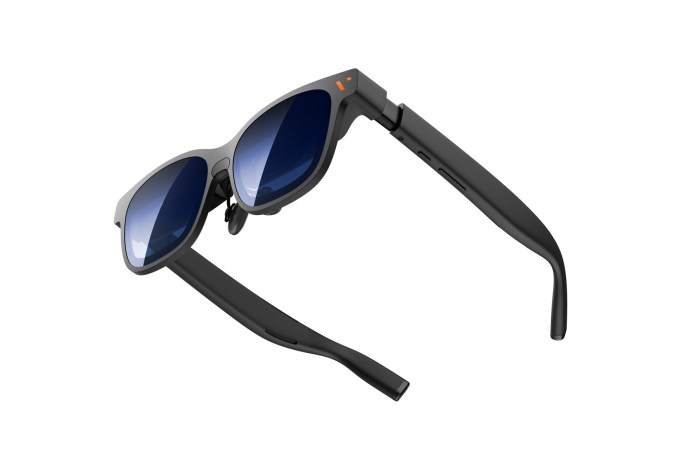
VITURE Calls XREAL Lawsuit “patent-troll-style” in Escalating AR Glasses IP Battle

January 20, 2026 From roadtovr

AR glasses maker XREAL is taking its competitor VITURE to court over a patent dispute, claiming that it’s selling and/or importing units into the US that infringe on its intellectual property. Viture claims however that Xreal is using the suit as a weapon to unfairly compete in the market rather than as a legitimate defense of innovation.

Xreal announced last week it was bringing a lawsuit against its direct competitor Viture, both of which have operating roots in China.

Xreal claims that Viture unlawfully makes, sells, and imports AR glasses that infringe its US patent, which covers a specific birdbath-style optical system. Notably, birdbath-style optics a generally cheaper and more easily produced than waveguides, like those seen in Meta’s 2024 Orion AR prototype.

VITURE Luma | Image courtesy VITURE

In a recent Reddit post, Viture has publicly disavowed Xreal’s narrative, arguing that Xreal is essentially acting as a patent troll.

“We deeply respect intellectual property,” Viture says. “IP exists to protect genuine innovation and to move an industry forward, not to be weaponized to create fear, confusion, or artificial barriers. Unfortunately, what we are seeing today does not reflect that principle.”

Continuing: “From our perspective, this bears striking resemblance to a patent-troll-style action that targeted XREAL last year, and now mirrors the same tactics being used against us.”

Technically, Viture argues that Xreal’s patent in question (US 11,988,839 B2) covers birdbath optical technology that is long-established and largely covered by expired prior art.

Viture claims that similar patents have already been rejected in China, that its products do not infringe, and that Xreal’s patent adds only minor, appearance-level changes rather than true optical innovation. Furthermore, Viture characterizes the patent as low-value and easily invalidated.

XREAL Aura | Image courtesy Google

A major point of contention is what Viture calls “deliberate misinformation,” specifically Xreal’s claims that its products are “banned across nine European countries.”

Viture maintains this as false: only the Viture Pro in Germany was affected by a preliminary injunction (as outlined by Android Authority), the product was already sold out, and all other products remain legally sold across Europe.

The company has appealed the injunction and filed a formal challenge to the patent’s validity, and says it has initiated legal action over what it calls “the deliberate circulation of false claims.”

Granted, it may be some time before we hear more about this case, as it’s just been filed in the Eastern District of Texas, and is still in early procedural stages. There is not public trial date at the time of this writing.


You can read Viture’s full response here on Reddit.

Filed Under: ar industry, News, XR Industry News

Meta Aims to Double, Possibly Even Triple Smart Glasses Production This Year

January 15, 2026 From roadtovr

Meta and EssilorLuxottica are potentially set to double the expected production target for their smart glasses, according to a recent Bloomberg report.

Citing people familiar with the matter, the report maintains Meta has suggested increasing annual capacity to 20 million units by the end of 2026, as the company hopes to seize growing consumer interest in smart glasses.

Additionally, the report maintains that, provided demand is strong, capacity could exceed 30 million units. Talks are said to still be ongoing, Bloomberg says.

Ray-Ban creator EssilorLuxottica noted in February 2025 that it was ramping up production capacity to 10 million annual units by the end of 2026.

Meta Ray-Ban Display & Neural Band | Photo by Road to VR

The 10 million figure already represented a significant push past its 2 million units sold following the 2023 release of the first-gen Ray-Ban Meta smart glasses.

Currently, Meta and EssilorLuxottica offer two fundamental smart glasses types: audio-only AI centric frames, styled in both Oakley and Ray-Ban variants, and Meta Ray-Ban Display, which includes a single full-color display embedded in the right lens.

This comes amid news that Meta is pausing the international rollout of the $800 Meta Ray-Ban Display smart glasses, which was set to arrive in the UK, France, Italy and Canada sometime in early this year. The company maintains the pause was due to “unprecedented demand and limited inventory.”

Meanwhile, Meta is laying off around 10 percent of staff at its Reality Labs XR division, according to a New York Times report. The move is seen as a strategic shift, moving focus from VR and its metaverse ambitions to AI and smart glasses.

Filed Under: AR News, Meta Quest 3 News & Reviews, News

Meta Waveguide Provider Claims “world’s first” 70° FoV Waveguide

January 9, 2026 From roadtovr

Lumus, the company that developed the waveguide optic used in Meta’s Ray-Ban Display smart glasses, says it has achieved a 70° field-of-view in a new design revealed this week at CES 2026. This conveniently matches the 70° field-of-view that Meta achieved in its ‘Orion’ prototype, but only with the use of novel materials.

The News

Back in 2024, Meta revealed its first AR glasses prototype, codenamed Orion. One of the prototype’s big innovations was its ability to squeeze a 70° field-of-view into such a small form-factor. This was made possible with the use of unique waveguide optics made with silicon carbide, a novel material that enabled the wider field-of-view thanks to its greater refractive index.

Orion porotype AR glasses | Image courtesy Meta

In 2025, Meta talked about the challenges of manufacturing silicon carbide waveguides, affordably, at scale. While the company said progress was being made, it still conceded that the work is ongoing.

“We’ve successfully shown that silicon carbide can flex across electronics and photonics. It’s a material that could have future applications in quantum computing. And we’re seeing signs that it’s possible to significantly reduce the cost. There’s a lot of work left to be done, but the potential upside here is huge,” the company said at the time.

But now Lumus, the company that developed the waveguides in Meta’s Ray-Ban Display glasses says it has achieved a 70° field-of-view in its glass waveguides. The company claims it’s the “world’s first geometric waveguide to surpass a 70° FOV.”

Image courtesy Lumus

The company announced that it is showing the new ZOE waveguide this week at CES 2026. Renders provided by the company show the company’s latest prototype to include the ZOE optics (though it’s worth noting that Lumus’ prototypes typically do not include on-board battery, compute, or tracking hardware, which would add bulk to any real product based on ZOE).

My Take

My gut tells me it probably isn’t a coincidence that Lumus has been aiming for a 70° field-of-view, which just happens to match what Meta achieved with its Orion prototype. Most likely, the company was tasked (implicitly or maybe even directly) with doing exactly that—proving that its waveguides could reach the 70° benchmark without using silicon carbide.

Beyond simply achieving a 70° field-of-view as a proof-of-concept, Lumus says the ZOE optic is made with the same process as its other glass waveguides. That’s a big deal, because the company has already proven that such waveguides can be manufactured at scale, thanks to the use of its waveguides in Ray-Ban Display, Meta’s first smart glasses with a display.

That means Lumus’ ZOE waveguide is most definitely on the shortlist for what Meta could use in its first pair of wide field-of-view AR glasses, which the company said it hopes to bring to market before 2030.

Granted, field-of-view isn’t everything. When it comes to optics, everything is a tradeoff. Increased field-of-view can impact brightness, PPD, and various visual artifacts. Without being able to see the new ZOE optic for myself, it’s hard to say whether or not Lumus has something truly new here, or if they’ve simply boosted field-of-view by trading other downsides.

I expect I’ll have a chance to see the ZOE optic later this year at AWE 2026 where I usually meet with Lumus to see their latest developments. In the meantime, I’ve also reached out to the company to learn more about how it reached the 70° field-of-view and what tradeoffs it did or didn’t have to make to get there.

Filed Under: News, XR Industry News

New Reference Design From Key Manufacturer Shows What to Expect From MR Headsets in 2026

January 8, 2026 From roadtovr

A Chinese company which mass produces many of the best known headsets in the industry has shared a new compact MR headset reference design which sets expectations for 2026.

Goertek is a little-known but massively important player in the XR industry. The company is a key enabler in the production of XR headsets as it provides reference designs which function as blueprints for consumer companies to build headsets, and handles mass production for some of the best known headsets in the industry.

At CES 2026, Goertek revealed its latest MR headset reference design. Reference designs like this act as a blueprint for any company that wants to put their own spin on the device and take it to market. Rather than a prototype—which might use novel materials or techniques that aren’t yet mass producible—reference designs like this represent a fully functional set of ready-to-manufacture components with tangible costs and delivery dates.

There isn’t a lot of info available on the reference design yet, except what has been officially stated by Goertek:

An Ultra-Lightweight MR Reference Design showcases system-level optimizations, reducing the weight of a 4K MR headset to approximately 100 grams. It delivers retinal-level clarity (38 PPD) within a 100-degree field of view, with Video See-Through (VST) and 6DoF [tracking].

We’ve reached out to Goertek for details, but in the meantime many questions remain.

Considering the incredible 100g weight of the headset, it seems almost certain that this reference design does not include on-board compute or battery. For comparison, Quest 3, even with a soft strap, weighs in at 515g.

Image courtesy CNFOL

That means the headset would need to rely on a tethered compute/battery pack, or some other host device, to function. This would follow the trend of headsets like Vision Pro and Galaxy XR which both offload the battery weight to a tethered battery.

Adding to the confusion, Goertek calling the headset an “MR reference design” would generally be understood to mean a standalone device, but in the one photo we’ve been able to find of the device in use so far (courtesy CNFOL), it appears to be part of the company’s “PCVR Software Suite” display station, and looks to be tethered directly to the PC in front of the user.

Image courtesy CNFOL

In any case, the reference design shows us what kind of resolution and field-of-view can be expected from headsets in 2026 with this compact form-factor, even if the design doesn’t have its own compute/battery.

Image courtesy CNFOL

Likely the reference design is meant to show the form-factor while leaving it up to customer companies to decide if they would bring it to market as a standalone or tethered headset.

Filed Under: News, XR Industry News

Panasonic Ends Collaboration with Shiftall on MeganeX Series VR Headsets

January 8, 2026 From roadtovr

Shiftall, the Japan-based VR hardware startup, is no longer working with Panasonic on its MeganeX series of thin and light PC VR headsets.

Initially acquired by Panasonic in 2018, Shiftall developed a number of devices as the company’s ad hoc internal skunk works, including the first MeganeX PC VR headset, HaritoraX wireless body trackers, FlipVR motion controllers, and mutalk soundproof microphones.

While Panasonic sold off Shiftall in early 2024, the companies continued to collaborate on the MeganeX headset series.

Shiftall MeganeX “8K” Mark 2 | Image courtesy Shiftall

Now, according to a Shiftall press statement (via Mogura), Panasonic is officially no longer involved with development of MeganeX as of December 2025.

“As a result, Panasonic will transfer the MeganeX series business assets to Shiftall,” the company says, machine translated from Japanese. “And from 2026 onwards, Shiftall will continue to develop, sell and provide customer support (for both businesses and individuals) for the MeganeX series.”

Shiftall’s latest PC VR headset is the MeganeX “8K” Mark II, a follow-up to its thin and light PC VR headset originally launched late last year, the MeganeX superlight “8K”.

MeganeX “8K” Mark II contains the same 3,552 × 3,840 per-eye micro-OLEDs as superlight, supporting up to 90 Hz refresh, and the same SteamVR tracking standard, which requires the user to buy SteamVR 1.0/2.0 base stations separately.

Filed Under: News, PC VR News & Reviews

Meta Pauses International Release of Meta Ray-Ban Display Glasses

January 7, 2026 From roadtovr

Meta Ray-Ban Display glasses seem to be selling too well, as the company announced it’s delaying the international rollout of its first display-clad smart glasses.

The News

Initially released in the US back in September, Meta said it was hoping to bring the $800 smart glasses to a number of regions in early 2026, which includes a single color display embedded in the right lens.

Now, the company says in a blog post it’s decided to “pause” the planned expansion to the UK, France, Italy and Canada, citing “unprecedented demand and limited inventory.”

Meta Ray-Ban Display Glasses & Neural Band | Image courtesy Meta

The company characterizes stock as “extremely limited,” noting that its seen an “overwhelming amount of interest, and as a result, product waitlists now extend well into 2026.”

Meta says it will continue to focus on fulfilling orders in the US while they “re-evaluate [the] approach to international availability.”

My Take

I was looking forward to getting my hands on a pair of Meta Ray-Ban Display glasses here in Italy, one of the regions currently on “pause”—which my Corpo-to-English translator says I probably shouldn’t hold my breath.

While Meta Ray-Ban Display can’t do everything promised just yet—and doesn’t actually have an app store—the device can do a fair number of things I was hoping to test out if it fit into my daily life.

After all, it can do everything the audio-only Ray-Ban Meta glasses can do in addition to serving up a viewfinder for taking photos and video, the ability to see and respond to messages via WhatsApp, Facebook Messenger, and Instagram, and give you turn-by-turn walking directions in supported cities.

Turn-by-turn Directions in Meta Ray-Ban Display | Image courtesy Meta

Months after launch, Meta says it’s also now pushed an update that includes a teleprompter, the previously teased EMG handwriting, as well as more cities for pedestrian navigation.

Still, it makes a lot more sense from a manufacturing perspective. Meta needs to go slow and deliberate with Meta Ray-Ban Display though, if only based on the fact that the device has likely been heavily subsidized to not be eye-wateringly expensive out of the gate; the company is no doubt eating the fairly high bill of materials if only based on waveguide wastage rates. No app store also means no app revenue, making the first-gen decidedly more of a large beta test than anything.

So, right now it seems like Meta is deliberately going slow to make sure use cases, distribution, and supply chain are all in place before really cashing in on the second gen—maybe following Quest’s playbook; in 2019, the company released the original Quest only to toss out Quest 2 a year later, making for the company’s best-selling XR device to date—and also leaving everyone who bought the first-gen to upgrade only a year later.

Filed Under: AR Development, ar industry, News, XR Industry News

« Previous Page
Next Page »

  • Home